



Cord Ends and Drawstring Tips
Cord ends and drawstring tips are terminal components used to finish the cut end of a cord, lace, string, compatible narrow webbing or strap. Depending on the design, a cord end may clamp the material, conceal a knot, reduce fraying or add a decorative finishing detail.
This category includes metal and plastic cord ends with round or rectangular entries and different fitting structures, including crimp-on, knot-retained, sew-on, bond-on, pass-through and interlocking designs.
Do not select by outside appearance alone. Measure the cord diameter or, for flat material, both width and thickness. Then compare the measurements with the internal opening, base material and verified fitting method.

9.35 USD 17.60 USD
Ex Tax:8.50 USD


CORD END SELECTION CENTRE
Find the Right Cord End for Your Drawstring
Compare metal and plastic cord ends for garments, hoodies, tracksuits, jackets, bags, footwear, sportswear and fashion accessories. Check the cord-entry dimensions, actual cord diameter, material, finish and attachment method before choosing the correct cord-end design.
DECORATIVE METAL FINISH
Metal Cord Ends
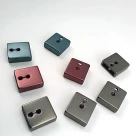
Browse zinc alloy, brass and other metal cord ends for garments, bags, footwear and fashion accessories. Compare cylindrical, cube, barrel, bell, crimp-on, glue-in and sew-on designs for different production methods.
Browse metal cord ends →LIGHTWEIGHT AND PRACTICAL
Plastic Cord Ends
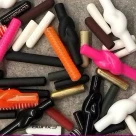
Explore lightweight plastic cord ends for hoodies, sportswear, bags, footwear and promotional products. Compare snap-fit, locking, capped and crimp-style constructions with different cord-entry dimensions and colour options.
Browse plastic cord ends →DRAWSTRING ADJUSTMENT
Cord Locks and Stoppers
Browse metal and plastic cord locks used to adjust drawstring length and tension. Match the lock opening to the actual cord diameter. A cord end finishes the cord permanently, while a cord lock provides adjustable movement.
Browse cord locks →COMPLETE COLLECTION
All Cord Ends and Drawstring Tips
Compare metal and plastic cord ends by cord-entry size, material, finish, attachment method and intended application. Find suitable solutions for round cords, flat drawstrings, elastic cords and woven tapes.
Browse all cord ends →✓
Browse Compatible Cord Locks → Do not select a cord end by appearance alone
Measure both the actual and lightly compressed diameter of a round cord. For flat drawstrings or woven tapes, check both width and thickness. Confirm whether the cord end is fitted by crimping, gluing, sewing, threading or snap-lock assembly before ordering.
What Is a Cord End or Drawstring Tip?
A cord end is a fixed terminal accessory installed at the cut end of a cord, drawstring, lace, compatible elastic or narrow strap. Depending on its construction, it may help contain loose fibres, conceal a knot, create a grip area or provide a clean decorative finish.
A cord end is not an adjustable locking mechanism. Use a cord lock or drawstring stopper to adjust the working length or gathering of a drawstring. Both component types may be used on the same finished product.
Which Cord End Should Be Selected?
| Application Requirement | Cord End to Consider | Specification to Check |
|---|---|---|
| Finish a round cord | Cylindrical, conical, cube, bead or another model with a round entry | Actual and compressed cord diameter |
| Conceal a terminal knot | Pass-through or knot-retained cord end | Internal cavity and completed knot dimensions |
| Terminate flat cord or narrow webbing | Open-edge or closed-edge crimp cord end | Material width and thickness |
| Minimise component weight | Plastic cord end | Entry size, closure structure and colour |
| Create visible metal hardware | Zinc alloy, brass, steel or another verified metal cord end | Base material, finish, weight and fitting method |
| Retain the cord inside a cavity | Bond-on cord end | Internal opening and adhesive compatibility |
| Attach the end through stitching | Sew-on cord end | Sewing area, thread and cord thickness |
| Use a lightweight mechanical closure | Crimp-on or interlocking plastic cord end | Closing force and pull resistance |
Metal and Plastic Cord-End Categories
Metal Cord Ends
Metal cord ends may be made from zinc alloy, brass, steel, iron or another metal stated on the individual product page. The range includes open-edge and closed-edge crimp ends, bond-on models, sew-on tips, decorative beads, bell shapes, cubes, cylinders and other model-specific forms.
Metal models may be selected when the terminal component is intended to remain visible, match other plated hardware or provide a more substantial finishing detail.
Plastic Cord Ends
Plastic cord ends may be suitable where low component weight, colour matching and practical assembly are important. The range includes crimp-on, interlocking, capped, bell-shaped and pear-shaped models with different entry structures.
A plastic body does not corrode like exposed metal, but wash suitability, temperature resistance, chemical exposure and outdoor suitability must still be assessed according to the verified material and complete component construction.
Cord-End Fitting Methods
| Fitting Method | How It Works | Application Warning |
|---|---|---|
| Knot-retained | The cord passes through the component and is secured by a knot inside or behind it. | The completed knot must fit within the available cavity. |
| Pass-through | The cord passes through an internal channel and is retained according to the model structure. | A sealed end or added component may affect the assembly sequence. |
| Crimp-on | The metal or plastic body is closed around cord, webbing or strap. | Excess pressure may crush the cord or deform the component. |
| Bond-on | The cord is retained inside the component with a suitable bonding system. | The adhesive must be compatible with the cord, finish and base material. |
| Sew-on | A sewing area is used to attach the component to the cord or product. | Hole size, thread thickness and pull direction must be assessed together. |
| Interlocking | Inner and outer plastic pieces close around the cord end. | Confirm full closure and pull resistance on a sample. |
Open-Edge and Closed-Edge Crimp Ends
An open-edge crimp cord end has side sections that are closed around the cord, webbing or strap. The material position is generally easier to observe before crimping.
A closed-edge crimp cord end surrounds more of the terminal section. The material is placed inside the specified internal opening before the body is closed with controlled pressure.
A closed body does not automatically produce stronger retention. Performance depends on internal width, internal height, material thickness, metal construction and the applied crimping force.
How to Measure Cord-End Compatibility
| Measurement | Why It Matters | Selection Note |
|---|---|---|
| Outside round-cord diameter | Determines whether the cord enters the component. | Measure several points without flattening the cord. |
| Compressed diameter | Shows how much a soft or filled cord narrows during crimping. | Compare the normal and lightly compressed measurements. |
| Flat-cord or webbing width | Must match the internal width of the cord end. | Do not use the outside body dimension as the compatibility measurement. |
| Flat-cord or webbing thickness | Affects whether the crimp is insufficient or excessive. | Measure any folded or overlapping terminal section. |
| Completed knot dimensions | The knot must fit inside a knot-retained model. | Test with the actual knot used in production. |
| Internal component opening | Defines the actual material capacity. | Do not confuse the internal opening with decorative outside dimensions. |
Common Entry Groups
The product range includes round and rectangular entries. Imperial dimensions below are approximate reference conversions.
| Entry Group | General Application | Compatibility Check |
|---|---|---|
| 2.5–3.5 mm / 0.10–0.14 in | Fine cords, decorative strings and narrow laces | Check whether a sealed or knotted section can enter the component. |
| 4–4.5 mm / 0.16–0.18 in | Standard lightweight garment and accessory cords | Check braid density and compressibility. |
| 5–5.8 mm / 0.20–0.23 in | Hoodies, bags and medium-weight drawstrings | Confirm that the fitted end grips the cord correctly. |
| 6–7.5 mm / 0.24–0.30 in | Filled cords, thicker laces and decorative applications | Check whether the knot or compressed cord fits inside the cavity. |
| 8–9.2 mm / 0.31–0.36 in | Thick cords and models requiring a larger cavity | Evaluate component weight and scale on the finished product. |
| 8 × 3 mm / 0.31 × 0.12 in and 10.5 × 3 mm / 0.41 × 0.12 in rectangular entries | Flat cord, narrow tape and compatible strap ends | Measure width and thickness separately. |
This table is a general selection guide and does not guarantee compatibility. Cords with the same nominal size may differ in braid construction, filling hardness and surface friction.
Metal and Plastic Cord Ends Compared
| Feature | Metal Cord End | Plastic Cord End |
|---|---|---|
| Weight | May create a heavier and more noticeable hardware detail. | Adds less weight to lightweight fabrics and cords. |
| Appearance | May include nickel, black nickel, gold, antique brass, gunmetal and model-specific finishes. | May include black, white, coloured, transparent or paintable surfaces. |
| Fitting options | Crimp-on, knot-retained, sew-on, bond-on and pass-through structures may be available. | Crimp-on, knot-retained, capped and interlocking structures may be available. |
| Typical priority | Visible metal hardware, finish coordination and decorative detail | Low weight, colour matching and practical assembly |
| Environmental assessment | Depends on the verified base metal and finish. | Depends on the polymer, internal parts and conditions of use. |
A metallic colour or plated surface does not prove that a cord end is stainless steel or suitable for saltwater exposure.
Cord Ends and Cord Locks Are Different Components
| Feature | Cord End / Drawstring Tip | Cord Lock / Drawstring Stopper |
|---|---|---|
| Main function | Finishes the cut end of a cord. | Adjusts cord length or gathering. |
| Position | Installed at the terminal section. | Positioned along the cord. |
| Movement | Normally remains fixed. | Can be released and repositioned. |
| Combined use | A cord lock may provide adjustment while cord ends finish both terminal sections on the same drawstring. | |
Real-World Applications
- Hoodie, coat and jacket drawstring ends
- Tracksuit, shorts, trouser and waistband cords
- Bag, backpack, pouch and drawstring-sack cords
- Shoe, boot and trainer laces
- Hat, headwear and neck-warmer cords
- Narrow webbing, tape and compatible leather or PU strips
- Craft, jewellery and decorative cord applications
- Compatible round-elastic ends
Recommended Assembly Sequence
- Measure the round cord diameter or the width and thickness of flat material.
- Thread any required cord lock onto the cord before fitting the terminal end.
- Pass the cord through the garment casing or eyelet.
- Set the final working length and terminal allowance.
- Complete any sealing, knotting or trimming operation.
- Fit the cord end using its verified crimping, sewing, bonding or interlocking method.
- Complete pull, movement and appearance checks.
Incorrect Selection and Assembly Warnings
- A cord end and a cord lock do not perform the same function.
- An opening that is too small may prevent insertion or damage the cord surface.
- An opening that is too large may prevent secure retention.
- Measure both width and thickness when working with flat cord or webbing.
- Check the compressed diameter of soft and filled cords.
- Excessive crimping pressure may crush the cord or crack the component.
- An unsuitable adhesive may damage the cord, finish or plastic body.
- A completed cord end may not pass through a cord-lock channel.
- Finish colour alone does not verify the base material or corrosion resistance.
- Small-part and detachment risks must be assessed separately for children’s products.
- Complete a sample installation with the actual cord before wholesale ordering or production.
Related Categories
- Cord ends, cord locks and stopper accessories
- Metal cord ends
- Plastic cord ends
- Cord locks and drawstring stoppers
Frequently Asked Questions About Cord Ends
What is a cord end and what does it do?
A cord end is a fixed terminal accessory used to cover, contain or decoratively finish the cut end of a cord, drawstring, lace or compatible narrow strip.
What is the difference between a cord end and a cord lock?
A cord end finishes the terminal section. A cord lock moves along the cord and helps adjust its working length or gathering.
How do I select the correct cord-end size?
Measure the outside diameter of round cord. For flat cord, tape or webbing, measure both width and thickness and compare them with the internal component opening.
Is matching the nominal cord and entry size sufficient?
No. Braid density, filling hardness and compressibility can change compatibility. Complete a sample test with the actual cord.
How is a metal cord end fitted?
The method depends on the model. Metal cord ends may be crimped, retained by a knot, sewn, bonded or fitted through a pass-through structure.
How is a plastic cord end fitted?
Depending on the model, a plastic cord end may be crimped, retained by a knot or assembled by closing interlocking inner and outer pieces.
Does a crimp cord end require a press?
The required tool depends on the component dimensions, material and production quantity. Some models may be closed with controlled hand tools, while repeatable production may require a suitable crimping fixture.
Which measurements are required for flat cord?
Measure the width and thickness of flat cord, webbing or tape separately. Include any folded or overlapping terminal section.
Should the cord lock or cord end be installed first?
If the completed cord end is larger than the cord-lock channel, thread the cord lock first and install the cord end after completing the cord route.
Are all metal cord ends stainless?
No. Cord ends may be made from zinc alloy, brass, steel, iron or another metal. Verify the exact base material and finish on the individual product page.
Is sample testing necessary before wholesale production?
Yes. A sample confirms entry fit, fitting method, retention, weight, finish and appearance on the completed product.
Last updated: 21 July 2026
Business and brand: E-Düğme – Istanbul, Türkiye
Technical verification note: Refer to the individual product page for exact metric and imperial dimensions, base material, finish, pack quantity and fitting method.