Fabric covered shank buttons offer a refined balance of elegance, function, and visual harmony. Designed with a shank attachment on the back and a fabric-covered front surface, these buttons are especially suitable for jackets, coats, vests, dresses, outerwear, and other garments where a cleaner and more sophisticated finish is desired.
Because the stitching point is located underneath the button rather than on the visible face, fabric covered shank buttons create a smoother and more premium appearance. When covered in the same fabric as the garment, they help the design look more cohesive, more intentional, and more luxurious.
What Are Fabric Covered Shank Buttons?
Fabric covered shank buttons are buttons with a back-loop or shank construction and a fabric-covered front. Unlike perforated or sew-through buttons, they do not show visible holes on the front side. This makes the button surface appear cleaner and more polished, which is particularly valuable in garments that rely on elegant detailing.
On e-dugme.com, shank buttons are already positioned as products used for both functional and aesthetic purposes in jackets, coats, vests, and outerwear, which makes this subcategory a natural fit for the site’s button structure.
Why Choose Fabric Covered Shank Buttons?
One of the main reasons to choose fabric covered shank buttons is visual continuity. Standard plastic or metal buttons may work functionally, but they do not always blend with the garment itself. A fabric-covered shank button, on the other hand, becomes part of the design. It supports the textile rather than interrupting it.
This makes the category especially appealing for women’s fashion, boutique collections, occasionwear, elegant outerwear, and design-focused apparel. The combination of a covered surface and shank structure creates a softer, more elevated look that helps the garment appear more carefully finished.
Common Uses
Fabric covered shank buttons are most commonly used in jackets, blazers, coats, waistcoats, and other outerwear products. The shank structure often provides a more balanced position on medium and heavier fabrics, while the covered face helps preserve a stylish and coordinated visual finish.
They can also be used in dresses, blouses, skirts, and decorative fashion details. When covered with the same garment fabric, they contribute to a more curated and collection-driven feel. This is especially useful for makers who want their garments to look more distinctive and premium.
In bridalwear and occasionwear, fabric covered shank buttons are often appreciated for their elegant and delicate effect. They can be used on back closures, cuffs, neckline details, and decorative rows where a clean and romantic appearance is important.
Advantages
The most visible advantage is the smooth front appearance. Because there are no visible stitch holes on the face, the fabric remains the main visual element. This gives the button a more seamless and refined character, especially in minimalist or elegant garment design.
Another advantage is the way these buttons integrate into the product. Matching covered buttons can make a garment look more expensive, more intentional, and more thoughtfully produced. For designers and ateliers that build product value through details, this is a powerful benefit.
What to Consider When Choosing
The first thing to consider is where the button will be used. Larger sizes may work better for coats, jackets, and structured garments, while smaller and more delicate options may be better for dresses or blouses. The right diameter should support both the garment scale and the visual balance.
Fabric selection is also highly important. Fine fabrics reveal the button shape more clearly, while denser fabrics can create a fuller and richer effect. Satin, velvet, linen, cotton, and patterned textiles all create different visual results. The goal should always be to maintain harmony between the button and the garment.
It is also useful to decide whether the button will be primarily decorative or used as an active fastening element. If the button will be used frequently, durability and application quality become even more important.

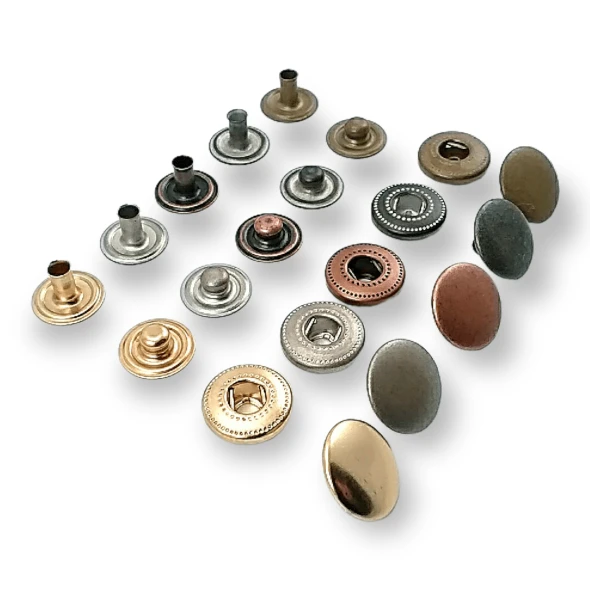
-no5-k0010%20(3).jpg-590x590.webp "Eyelets and Grommets")
.jpg-590x590.webp "Rivets")
.jpeg-230x230.webp "15 mm Fabric Cover Button with Sew-Through Shank 24 L 250 Pcs/Pack – KAP0024")
.jpeg-230x230.webp "20 L - 12.5 mm Fabric Cover Button with Sew-Through Shank, 500 Pcs/Pack – KAP0020")
.jpeg-230x230.webp "22 L - 14 mm Fabric Cover Button with Sew-Through Shank, 250 Pcs/Pack – KAP0022")
.jpeg-230x230.webp "26 L - 16 mm Fabric Cover Button with Sew-Through Shank, 250 Pcs/Pack – KAP0026")
.jpeg-230x230.webp "28 L - 17 mm Fabric Cover Button with Sew-Through Shank, 250 Pcs/Pack – KAP0028")