Hook and Eye Closures: Choosing the Right Fastener for Garments
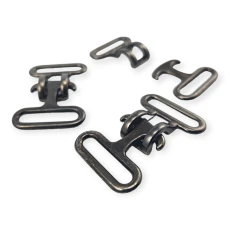
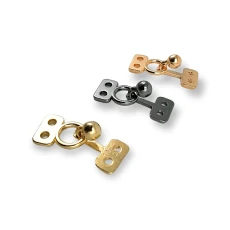
Hook-and-eye closures connect two overlapping sections of fabric, help finish a garment opening or create a deliberate decorative fastening point. They are found in skirts, trousers, jackets, coats, tailored pieces and certain outerwear designs. The selection at E-Düğme includes small hook clasps, ball-ended models, closures specifically identified for sewing, larger ornamented clasps and fur hook systems. These are not all the same mechanism, and they should not be presented as universally interchangeable hardware.
Start with the job the closure must perform. Does it sit discreetly inside a waistband? Is it a visible feature on a jacket? Will it be attached through several layers of lined outerwear? Next, determine the attachment method, the hook and mating piece, and the actual space available on the garment. Check model-specific measurements before considering color or finish. An apparently matching nominal dimension does not guarantee that two components from different closure systems will engage correctly.
Understand the Different Fastener Families
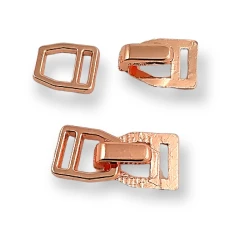
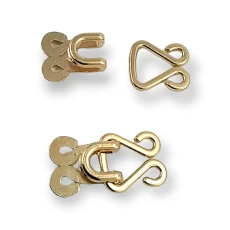
Compact metal hook clasps: Small metal closures are listed in several nominal size families, including 7.5 mm (0.30 in), 10 mm (0.39 in) and 14.5 mm (0.57 in). Depending on the individual product, the advertised measurement may refer to a particular part rather than the overall length. For a precise fit, compare the hook projection, the matching loop or eye and the intended attachment points. A compact size may suit a discreet finish, but the real garment should determine whether the selected piece sits correctly.
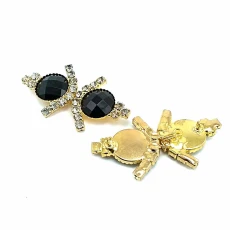
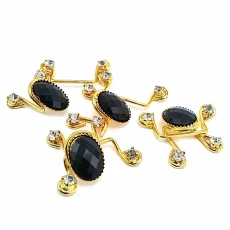
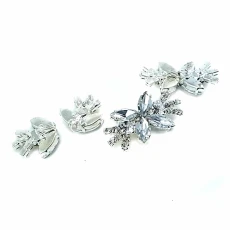
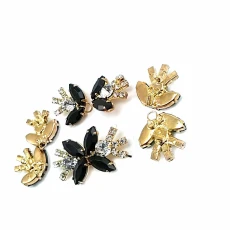
Decorative garment clasps: Wider ornamented models, including a 50 mm (1.97 in) stone-decorated metal clasp, are visually different from a small hidden hook. They can be considered when the closure is meant to contribute to the design of a coat or jacket. Fur hooks: Small and large fur-hook variants are separate products with their own hook and D-ring geometries. They may be worth examining for layered outerwear, but their suitability must be tested on the particular garment construction rather than inferred from the name alone.
Product Comparison by Verified Model
The models below are separate product records. This comparison is intended to guide further checking, not to claim that a listed hook can replace any other hook with a similar number. Product pages provide the definitive information about the offered options, quantities and current availability.
What Does the Size Label Actually Measure?
Do not assume that every nominal size printed in a product name represents the same component dimension. A hook may be described by opening, width or another commercial size class; its full profile can occupy more room on the garment. Where a technical drawing is available, review the hook height, total length, mating-part opening and position of the attachment points separately. Measuring only the width of the existing hook is not sufficient when purchasing a replacement for a different closure system.
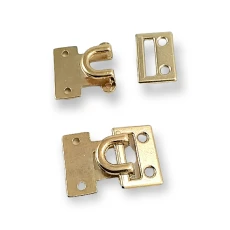
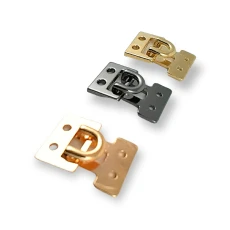
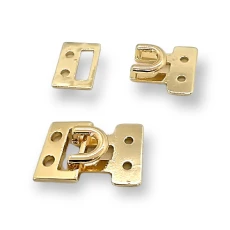
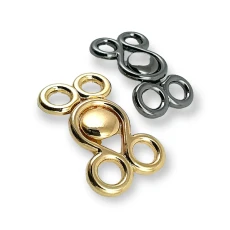
This distinction matters particularly with fur-hook hardware. The smaller A 499 and larger A 500 records provide different measurements for their hooks and D-ring counterparts. A 10 mm or 15 mm size label is not a statement that the complete fastener occupies only that space. Confirm the amount of material available for stitching, the final direction of the hook, and the distance between the two garment edges when closed. Keep the pair together during sample evaluation rather than judging the hook alone.
Sew-On Hooks Are Not the Same as Press-Fit Trouser Hooks
Hook-and-eye terminology can be used broadly across several manufacturing methods. A sew-on hook is attached through its appropriate sewing points. A press-fit or die-set trouser hook can require a different base component, prongs and purpose-designed setting tooling. A product is not automatically sew-on simply because it is listed as a skirt or trouser hook. For each model, follow the product-specific attachment specification.
If your project requires press-installed closures instead of a sew-on clasp, compare the separate trouser and skirt hook-and-bar closure category. The correct attachment method is just as important as the nominal size. Do not use a setting die on a hook intended only for sewing, and do not assume that components from separate closure systems will form a reliable matched set. Where tooling compatibility is unclear, a physical sample is the appropriate starting point.
Waistbands, Lining and Thin Fabric Considerations
In a skirt or trouser waistband, the fastening point must align with the garment's natural overlap. The hook should close without forcing the waistband out of line, and the attachment stitches should not distort the visible fabric. Consider the presence of lining, interfacing and multiple fabric layers when determining placement. A hook sewn too near an unsupported edge may place excess strain on the seam; one sewn too far inward can create an awkward overlap. Check the complete closure on the actual garment before approving a position.
Delicate fabric may show an outline or impression from hardware placed underneath it. In such cases, the fastener's profile and the way stitching transmits tension through the textile can matter more than its decorative appearance. A sample sewn through the intended lining and outer fabric helps reveal whether reinforcement or a different model should be considered. Do not claim that any closure in the catalog is compatible with every fabric, leather or textile thickness.
Coats, Fur Hooks and Visible Decorative Fasteners
Outerwear often has thicker seams and more layers than a lightweight skirt. The fastener may need to lie flat against the lining while accommodating the jacket's opening movement. When evaluating fur hooks, compare the width of the attachment area and the relationship between hook and D-ring. Both components affect the closed fit. The larger model is not automatically a better choice simply because more of it can be seen; it may be less suitable where available space is limited.
Decorative clasps invite a different design decision. A visible stone-decorated or shaped fastening piece can form part of a jacket's visual composition, but the appearance should not distract from the mechanical requirements. Check where the garment must flex, whether the fastening pieces remain aligned, and whether the decoration is positioned away from areas likely to catch on fabric. Compare available finishes and actual product photographs, keeping in mind that screen colors can vary with lighting.
Material and Finish: Separate Verified Facts from Assumptions
Some models explicitly identify their material as zinc alloy; others may be described simply as metal or may have an ornamented surface. Material claims must remain model specific. Nickel-colored finishes should not be confused with a statement that the entire product is made of nickel. Likewise, a metallic appearance is not proof of stainless steel, rust resistance, a particular plating thickness or a guaranteed load rating. Review the actual listing before making those claims in a production specification.
When multiple hardware pieces will appear on the same garment, review samples under similar lighting. Buttons, zipper pulls, hooks and other metal accessories can differ in tone even when their online color names look similar. For repeated production runs, record the chosen finish and the accepted physical reference sample. If the listing does not state a corrosion rating or certified material grade, treat that property as unverified rather than filling the gap with general marketing language.
Sample Sewing and Quality Control
Begin by placing the hook and matching part on the garment at the planned closed position. Mark the attachment points, allowing for the real overlap and construction layers. Make one sample using the actual sewing method intended for production. Open and close the garment several times, then inspect whether the hook engages cleanly, whether the fabric puckers and whether the counterpart moves or twists when tension is applied. Try the complete garment on its intended form where practical: flat-table testing alone may miss problems caused by body movement or fabric drape.
If the closure does not align, do not immediately order a larger hook. Recheck the sewing orientation, the counterpart's location and the available overlap. The problem may come from placement rather than product size. Repeat the sample with corrected positioning and retain the accepted result. For quality control across batches, maintain a record of the actual hook model, matching component, finish, thread method and approved fabric construction. Never describe a single satisfactory sample as a universal fit guarantee for unrelated garments.
Ordering for Repair, Sampling and Repeat Production
Repair work begins with identifying the original fastener as closely as possible. If the mating piece is still installed, examine its shape before selecting a replacement hook. For new garments, a small sample run is more informative than ordering a large quantity based solely on a product title. Document the closure type, model code, finish and fit notes on the production sheet so the same configuration can be ordered again. Keep physically similar variants stored separately to reduce assembly errors.
Quantities, minimum orders and sale units can vary by product and option. A model listed as a promotional pack should not automatically be treated as having the same pack contents as the standard item. Reconfirm the current listing before purchasing. If an ornamented design is out of stock, do not assume that a different size or shape can be substituted without checking its mating part and garment appearance. Accurate product matching can prevent wasted material and unnecessary repair labor.
Quick Decision Table
| Question | Check | Avoid |
|---|
| Hidden or visible closure? | Profile, intended appearance and location | Choosing a large decorative clasp for a hidden application |
| How is it attached? | Sewing points versus a press-fit system | Using the wrong installation method |
| Which size? | Hook geometry, mating part and fabric overlap | Assuming all numbers measure the same dimension |
| Do the two pieces fit? | Matching hook and eye or D-ring geometry | Mixing unrelated systems |
| What will be supplied? | Current listing's unit, variants and availability | Confusing one component with a set |
Frequently Asked Questions
Are hook-and-eye clasps and press-fit trouser hooks the same?
No. They can perform similar closure roles but may use completely different parts and installation methods.
Does every hook in this category require sewing?
Not necessarily. Check the particular model's attachment method rather than relying on a general category label.
How do I compare a 7.5 mm and a 10 mm hook?
Look beyond the advertised number to the hook profile, mating piece, actual sewing area and garment overlap.
Can a fur hook be used on a coat?
A model may be considered for suitable outerwear, but confirm the fabric construction, fastening direction and sample fit first.
Is a decorative stone clasp suitable for an invisible closure?
Its visual purpose and profile may differ from a discreet hook. Compare its appearance and actual fastening mechanism before deciding.
Will a hook and a mating eye be supplied together?
That depends on the product and sale unit. Confirm the contents of the live product listing.
Can parts from two models with the same size be mixed?
Do not assume so. The hook and its mating component need a verified geometric and functional match.
How can I avoid visible marks on delicate fabric?
Test the hardware profile, reinforcement and stitch placement on the actual garment layers before production.
What should be checked before a bulk order?
Approve a representative sample, record the complete model and finish, and verify current package and availability details.
Use the product table to identify a relevant model, then review its real dimensions and installation details. The correct garment closure combines a suitable hook, an appropriate mating piece and a fastening method proven on the intended fabric.

.jpg-40x40.webp "Magnetic Snaps Buttons")

.jpg-40x40.webp "Prong Snap Fasteners for Baby Clothes")


.jpg-40x40.webp "Curved Snaps Buttons")


.jpg-40x40.webp "Snap Fasteners Half Dome type")
-no5-k0010%20(3).jpg-40x40.webp "Eyetlets")


-K0014.png-40x40.webp "Steel Eyelets and Iron Metal Grommets")

.jpg-40x40.webp "Flat Brass Eyelets and Grommets")

.jpg-40x40.webp "Aluminum Eyelets and Grommets")


.jpg-40x40.webp "Galvanized Eyelets and Grommets")


.jpg-40x40.webp "Grommet Punching Dies")
.jpg-40x40.webp "Hole Cutter Tools and Punching Dies")


.jpg-40x40.webp "Pearls Types")


.jpg-40x40.webp "Rivets")


.jpg-40x40.webp "Water-Repellent Jacket Zippers")


.jpg-40x40.webp "Tires")

.jpg-40x40.webp "Round Braided Elastic Cord")


.png-40x40.webp "Enameled Buttons")


.png-40x40.webp "Two Hole Sewing Buttons")


.jpg-40x40.webp "Carabiner Clips, Snap Hooks and Bag Hooks")


-PhotoRoom.png-40x40.webp "Spring Rings, Key Rings and Snap Clamps")


.png-40x40.webp "Hook and Eye Closures Sew-On")


.png-40x40.webp "Bag Making Kits")

.png-40x40.webp "Continuous Zipper Sets")


.jpg-40x40.webp "Bra Underwires")



-no5-k0010%20(3).jpg-590x590.webp "Eyelets and Grommets")
.jpg-590x590.webp "Rivets")
.jpg-100x100.webp "1 cm - 0,39")
.jpeg-100x100.webp "10 mm / 0.39 in Gold Zamak Bra Strap Slider and Ring Set, 500 Pairs PBT0006PROMO")
_7_11zon.jpg-100x100.webp "10 mm / 0.394 in Ball-Tip Sew-On Hook Fastener, 50 Pieces E 1879 PROMO")
-s1351%20(1%20(6).jpeg-100x100.webp "10 mm 0,39")
.png-100x100.webp "10.5 mm / 0.41 in Frosted Pearl Stainless Prong Snap Fasteners, 100 Sets/Pack ERBCLK0008BBSD")
.png-100x100.webp "10.5 mm / 0.41 in White Pearl Stainless Prong Snap Fasteners, 100 Sets/Pack ERBCLK0008BSD")
_7_11zon.jpg-230x230.webp "10 mm / 0.394 in Ball-Tip Sew-On Hook Fastener, 50 Pieces E 1879 PROMO")
.jpeg-230x230.webp "7.5 mm / 0.30 in Zamak Metal Sew-On Hook & Eye Closure, 100 Pieces E1762PROMO")
.jpeg-230x230.webp "Fur Hook Big Model 1.5 cm Fur Hook A 500")
.jpeg-230x230.webp "Fur Hook Small Model 1 cm Fur Hook A 499")