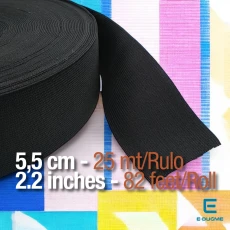
What Is Woven Elastic?
Woven elastic is a flat stretch band in which elastic cores or yarns are held within a warp-and-weft narrow fabric structure. The construction allows woven elastic to be produced in different widths, thicknesses, surfaces, colours and levels of extension force.
Although commonly used in trouser, tracksuit, skirt, shorts, legging and pyjama waistbands, woven elastic is not limited to waist applications. Product-specific constructions may also be considered for cuffs, footwear, underwear, bags, stationery, home textiles, medical textiles and other sewn products.
Not every woven elastic performs identically. Some products are intended for fabric casings, while others may be sewn directly to fabric, displayed as a visible waistband or supplied with printed, jacquard, silicone, buttonhole or integrated-drawcord features.
Types of Woven Elastic
| Woven-Elastic Group |
Main Application |
Specification to Check |
| Standard flat woven elastic |
Waistbands, cuffs and garment casings |
Width, thickness, extension force and casing dimensions |
| Waistband elastic |
Trousers, skirts, shorts, tracksuits and pyjamas |
Finished waistband height, fabric weight and wearer comfort |
| Cuff or leg elastic |
Trousers, tracksuits, workwear and outerwear hems |
Finished circumference, fabric thickness and gathering |
| Soft woven elastic |
Underwear, nightwear, childrenswear and extended skin contact |
Surface, edge softness and pressure on the body |
| Footwear elastic |
Shoe tongues, heels, ankle sections and sandal connections |
Width, thickness, repeated extension and stitching |
| Buttonhole elastic |
Adjustable childrenswear, maternity and waistband systems |
Buttonhole spacing, button size and reinforced hole edges |
| Drawcord-integrated waistband elastic |
Tracksuits, sports shorts and adjustable waistbands |
Confirmed integrated cord and cord-exit construction |
| Silicone-grip elastic |
Garment edges requiring reduced slipping |
Silicone pattern, skin contact, grip and care conditions |
| Printed woven elastic |
Logos, lettering, patterns and collection graphics |
Printing method, surface, colour and abrasion |
| Jacquard woven elastic |
Logos or patterns woven directly into the band |
Pattern repeat, readability, width and colour combination |
| Metallic or decorative elastic |
Lingerie, costumes, sportswear and visible trims |
Decorative-yarn surface, skin contact and abrasion |
| Fold-over elastic |
Elastic binding around fabric edges |
Total width, fold line and finished binding width |
| Technical woven elastic |
Product-specific medical, furniture or automotive applications |
Strength, extension and intended conditions of use |
Not every construction is continuously stocked. The category may expand as new widths, surfaces and product types are added. Verify the current construction on the individual product page.
Which Woven Elastic Should Be Selected?
| Application Requirement |
Elastic to Consider |
Primary Check |
| Trouser, skirt or pyjama waistband |
Standard flat waistband elastic |
Clear internal height of the fabric casing |
| Tracksuit or sports-shorts waistband |
Woven waistband or integrated-drawcord elastic |
Extension force, confirmed cord structure and comfort |
| Legging or sportswear waistband |
Wide woven elastic |
Direct sewing, rolling and fabric recovery |
| Cuff or leg gathering |
Cuff elastic with compatible width and firmness |
Circumference, fabric thickness and gathering level |
| Adjustable childrenswear or maternity waistband |
Buttonhole elastic |
Buttonhole spacing, button and secure anchoring |
| Visible branded waistband |
Jacquard or printed woven elastic |
Logo repeat, colour, surface and finished circumference |
| Underwear or skin-contact product |
Soft-surface woven elastic |
Surface, edge, pressure and completed-sample comfort |
| Shoe or sandal connection |
Footwear-specific woven elastic |
Repeated extension, stitching and surface friction |
| Garment band requiring reduced slipping |
Silicone-grip elastic |
Silicone direction, grip and skin compatibility |
| Elastic binding around a fabric edge |
Fold-over elastic |
Fold line, fabric thickness and sewing structure |
How Should Woven-Elastic Widths Be Selected?
Elastic width must be evaluated with the garment section and clear internal casing dimensions. The following groups are general selection references; production approval should be based on a sample using the actual elastic and fabric.
| Elastic Width |
General Application Logic |
Selection Check |
| 6–10 mm / 0.24–0.39 in |
Fine connections, footwear, accessories and decorative applications |
Check seam allowance, extension load and attachment points. |
| 11–15 mm / 0.43–0.59 in |
Narrow casings, lightweight cuffs and compact textile areas |
Confirm that the band remains flat inside the casing. |
| 16–20 mm / 0.63–0.79 in |
Light waistbands, cuffs and childrenswear |
Check fabric weight and pressure around the finished circumference. |
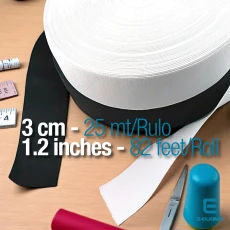
| 21–30 mm / 0.83–1.18 in |
Trousers, shorts, skirts, pyjamas and medium waistband casings |
Compare with finished casing height and seam allowance. |
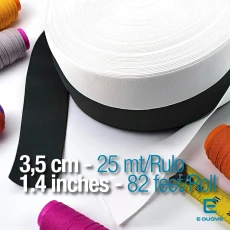
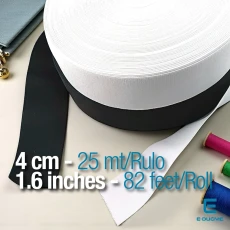
| 31–40 mm / 1.22–1.57 in |
Tracksuits, leggings, sportswear and visible waistbands |
Test extension force, rolling and wearer comfort. |
| 41–50 mm / 1.61–1.97 in |
Wide waistbands, underwear and supportive garment areas |
Check pressure and combined fabric-and-elastic extension. |
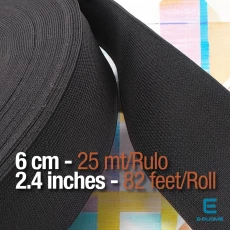
| 51–60 mm / 2.01–2.36 in |
Extra-wide casings and broad elastic surfaces |
Check waistband height, folding and garment proportions. |
| Above 60 mm / 2.36 in |
Special support, sports, medical and technical textile applications |
Verify product-specific strength and operating conditions. |
A wider elastic is not automatically stronger or firmer. Two products with the same width may behave differently because of weaving density, elastic-core count, thickness and extension force.
How to Match Woven Elastic to a Fabric Casing
A casing is the enclosed fabric channel through which the elastic is threaded. Compare the elastic width with the clear internal opening remaining after all seam allowances are completed, rather than the outside visible height.
| Condition |
Possible Result |
Check |
| Elastic is too wide |
It may jam, fold or fail to pass through the casing. |
Measure the completed clear internal opening. |
| Elastic is too narrow |
It may rotate, curl or move inside the casing. |
Avoid unnecessary clearance around the elastic. |
| Internal casing is rough |
Threading may be difficult and the elastic may abrade. |
Inspect seam allowances and raw fabric edges. |
| Elastic joint is too thick |
A hard or uncomfortable point may form around the waist. |
Test overlap and alternative joining methods. |
Woven, Knitted and Braided Elastic Compared
| Feature |
Woven Elastic |
Knitted Elastic |
Braided Elastic |
| Construction |
Warp-and-weft narrow woven structure |
Loop-based knitted construction |
Cross-braided yarn construction |
| General surface |
May be denser and firmer. |
May be softer and lighter. |
May have a more visible braided texture. |
| Width change under extension |
Many woven products retain width more consistently. |
Varies by product. |
Many braided products become narrower when extended. |
| Common application |
Waistbands, cuffs, visible bands and direct sewing |
Light garments, underwear and soft-contact areas |
Casings, gathering and lightweight elastic applications |
| Selection note |
Check thickness, firmness and weaving density. |
Check loop construction and behaviour under stitching. |
Measure width reduction under actual extension. |
These descriptions explain general construction differences. Exact behaviour varies according to yarn, elastic core, density and finishing process.
Is Woven Elastic the Same as Webbing or Woven Tape?
No. Woven elastic contains elastic yarns or cores and can extend and recover. Webbing and woven tape may be non-elastic, limited-stretch or designed for load-carrying applications.
Do not assume that a woven-looking band is elastic. Verify the product type, extension and intended use.
What Does Non-Roll Woven Elastic Mean?
Non-roll describes an elastic designed to reduce curling or rotation inside a fabric casing. This behaviour depends on weaving density, width, thickness, transverse reinforcement and casing construction.
Not every woven elastic is automatically completely non-roll. An oversized casing, unsuitable joint, insufficient anchoring or incompatible fabric may allow even a woven elastic to rotate.
Stretch Percentage, Extension Force and Recovery
| Technical Value |
Meaning |
Practical Check |
| Stretch percentage |
Shows how far the elastic extends relative to its relaxed length. |
Compare relaxed and controlled extended lengths. |
| Extension force |
The pulling force required to reach a defined extension. |
Compare equal samples at the same extension. |
| Recovery |
Shows how closely the elastic returns to its original length. |
Measure after repeated extension cycles. |
| Permanent extension |
Length remaining after the elastic fails to return fully. |
Compare the rested sample with its original length. |
Stretch percentage (%) = (Extended length − Relaxed length) ÷ Relaxed length × 100
This calculation does not identify support or firmness by itself. Two products with the same stretch percentage may require different pulling forces.
Technical Features to Check
| Feature |
Why It Matters |
Recommended Check |
| Relaxed width |
Determines casing and sewing compatibility. |
Measure several points without extending the elastic. |
| Thickness |
Affects casing volume and joint thickness. |
Measure without excessive compression. |
| Weight per length |
Provides a comparison of construction density. |
Compare equal widths and lengths. |
| Extension force |
Affects pressure on the wearer. |
Test at the actual finished circumference. |
| Recovery |
Affects shape retention after use. |
Complete repeated extension testing. |
| Curling or rolling |
Affects whether the waistband remains flat. |
Observe relaxed and sewn samples. |
| Surface friction |
Affects movement inside fabric and skin contact. |
Test with the actual fabric and operating direction. |
| Colour and batch consistency |
Prevents visible shade differences. |
Compare physical samples before production. |
| Roll length |
Determines production planning. |
Use the verified product-page specification. |
How Is Woven Elastic Sewn?
Inside a Fabric Casing
- Measure the completed clear internal casing height.
- Select a width that passes freely without excessive clearance.
- Determine the required circumference on a sample.
- Thread the elastic through the casing using a suitable guide.
- Confirm that the band has not rotated.
- Secure the ends using a suitable overlap or joining seam.
- Check even extension around the full circumference.
Directly Sewn to Fabric
- Mark equal distribution points on the elastic and fabric.
- Distribute the required tension evenly.
- Confirm that the stitch allows the elastic to extend.
- Do not overstretch the elastic during sewing.
- Inspect the sample for rippling, puckering and damaged yarns.
Stitch, needle, thread and machine settings vary by elastic and fabric. Establish production settings through a completed sample.
How Much Woven Elastic Is Required?
- Finished elastic length per item
- Total production quantity
- Overlap or joining allowance
- Sampling and size trials
- Cutting and quality-control allowance
- Damaged or unsuitable sections
- Colour and batch separation
Do not assume that the entire nominal roll length will become finished product.
Real-World Applications
- Trouser, skirt, shorts and pyjama waistbands
- Tracksuit, legging and sportswear waistbands
- Cuffs, leg openings and sleeve ends
- Underwear and corsetry bands
- Adjustable childrenswear and maternity waistbands
- Shoe tongues, heels and sandal connections
- Visible logo and patterned waistbands
- Bag, notebook, folder and pencil-case closures
- Home-textile, cover and cushion applications
- Product-specific medical, furniture and automotive uses
Not every woven elastic is suitable for every application. Load-carrying, prolonged skin contact, medical use, high temperature, outdoor exposure and chemical contact require product-specific verification.
Incorrect Selection and Application Warnings
- Do not select woven elastic by width alone.
- Measure the finished clear internal casing opening, not the outside casing height.
- Elastic that is too wide may fold or jam.
- Elastic that is too narrow may rotate inside the casing.
- A wider elastic is not automatically stronger or firmer.
- Woven appearance does not prove completely non-roll construction.
- An elastic cut too short may create excessive body pressure.
- An elastic cut too long may provide insufficient recovery.
- Test direct-sewn elastic under the selected stitch structure.
- Buttonhole elastic requires compatible buttons and reinforced holes.
- Do not describe a product as drawcord elastic unless an integrated cord is confirmed.
- Do not apply silicone, medical or heavy-duty claims without verification.
- Do not assume material composition from appearance.
- Do not apply wash, chlorine, saltwater, chemical or high-temperature resistance to the whole category.
- Prepare a sample with the actual fabric, elastic and sewing method before mass production.
Related E-Düğme Categories
Frequently Asked Questions About Woven Elastic
What is woven elastic?
Woven elastic is a flat stretch band in which elastic yarns or cores are held inside a narrow woven structure. It may be used in waistbands, cuffs and other textile applications.
What is the difference between woven and knitted elastic?
Woven elastic uses a warp-and-weft structure and may be denser or firmer. Knitted elastic uses loops and may be softer or lighter depending on the product.
Does woven elastic become narrower when stretched?
Many woven elastics retain their width more consistently than braided products, but actual width change must be measured at the intended extension.
How do I select elastic width for a waistband casing?
Measure the clear internal opening after seam allowances and select an elastic that works without jamming, folding or excessive clearance.
Why does woven elastic rotate inside a waistband?
The casing may be too wide, the joint may be uneven or the elastic may not be anchored correctly around the circumference.
Is wider woven elastic stronger?
Not necessarily. Performance depends on weaving density, thickness, elastic cores, extension force and the completed application.
Can woven elastic be sewn directly to fabric?
Yes, when the product construction is suitable. Test that the stitch allows extension without creating rippling or damaging the elastic.
What does non-roll woven elastic mean?
Non-roll elastic is designed to reduce curling or rotation inside a casing. The casing and sewing structure must still be compatible.
What is the difference between jacquard and printed elastic?
Jacquard patterns are formed with yarns during weaving. Printed graphics are applied to the surface of an already produced elastic.
Can woven elastic be used in footwear?
Footwear-specific products with suitable width, thickness, surface and repeated-extension performance may be used in tongues, heels and flexible connections.
How is woven-elastic stretch percentage calculated?
Subtract relaxed length from extended length, divide by relaxed length and multiply by 100. The result does not identify firmness by itself.
Is sample testing required before wholesale production?
Yes. A sample helps verify width, thickness, extension force, recovery, casing compatibility, stitching, colour and wearer comfort.
Last updated: 30 July 2026
Business and brand: E-Düğme – Istanbul, Türkiye
Technical verification note: Refer to the individual product page for exact metric and imperial width, thickness, fibre composition, weaving structure, colour, roll length, extension force, recovery, care and intended conditions of use.

.jpg-40x40.webp "Magnetic Snaps Buttons")

.jpg-40x40.webp "Prong Snap Fasteners for Baby Clothes")


.jpg-40x40.webp "Curved Snaps Buttons")


.jpg-40x40.webp "Snap Fasteners Half Dome type")
-no5-k0010%20(3).jpg-40x40.webp "Eyetlets")


-K0014.png-40x40.webp "Steel Eyelets and Iron Metal Grommets")

.jpg-40x40.webp "Flat Brass Eyelets and Grommets")

.jpg-40x40.webp "Aluminum Eyelets and Grommets")


.jpg-40x40.webp "Galvanized Eyelets and Grommets")


.jpg-40x40.webp "Hole Cutter Tools and Punching Dies")

.jpg-40x40.webp "Grommet Punching Dies")


.jpg-40x40.webp "Pearls Types")


.jpg-40x40.webp "Rivets")


.jpg-40x40.webp "Water-Repellent Jacket Zippers")


.jpg-40x40.webp "Tires")

.jpg-40x40.webp "Round Braided Elastic Cord")


.png-40x40.webp "Enameled Buttons")


.png-40x40.webp "Two Hole Sewing Buttons")


.jpg-40x40.webp "Carabiner Clips, Snap Hooks and Bag Hooks")


-PhotoRoom.png-40x40.webp "Spring Rings, Key Rings and Snap Clamps")


.png-40x40.webp "Hook and Eye Closures Sew-On")


.png-40x40.webp "Bag Making Kits")

.png-40x40.webp "Continuous Zipper Sets")


.jpg-40x40.webp "Bra Underwires")




-no5-k0010%20(3).jpg-590x590.webp "Eyelets and Grommets")
.jpg-590x590.webp "Rivets")
.jpg-100x100.webp "1 cm - 0,39\" Ring - Chain Link Ring 5000 pcs/ Pack A000H1")
.webp-100x100.webp "1 cm / 0.39 in Oval Eyelet Setting Die for Oval Grommet Installation KLPK0010OVLNO2")
.webp-100x100.webp "1–15 mm / 0.039–0.591 in Padova Hole Cutter Collection with 18 Cutter Sets and Long-Handle Striking Tool PDVSET0015EL")
.webp-100x100.webp "1.5 cm / 0.59 in Oval Eyelet Setting Die for Oval Grommet Installation KLPK0015OVLNO3")
.jpeg-100x100.webp "10 mm / 0.39 in Gold Zamak Bra Strap Slider and Ring Set, 500 Pairs PBT0006PROMO")
.webp-100x100.webp "10 mm / 0.39 in Inner Diameter Antique Brass-Tone Stainless Metal Eyelet Capsule, 250 pcs/Pack ER0024PPKAS")
.webp-100x100.webp "10 mm / 0.39 in Inner Diameter Antique Silver-Tone Stainless Metal Eyelet Capsule, 250 pcs/Pack ER0024PPKKO")
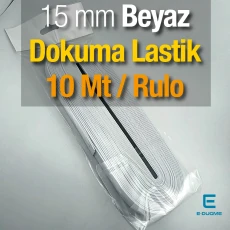
.png-230x230.webp "15 mm Woven Rubber 10 Mt / Roll DOKL0015")
.jpeg-230x230.webp "Drawcord Waistband Elastic 2,5 cm - 0.98\" - 25 mt/Roll – 27 Yds DOKL00025")