
.jpg-40x40.webp "Magnetic Snaps Buttons")

.jpg-40x40.webp "Prong Snap Fasteners for Baby Clothes")


.jpg-40x40.webp "Curved Snaps Buttons")


.jpg-40x40.webp "Snap Fasteners Half Dome type")
-no5-k0010%20(3).jpg-40x40.webp "Eyetlets")


-K0014.png-40x40.webp "Steel Eyelets and Iron Metal Grommets")

.jpg-40x40.webp "Flat Brass Eyelets and Grommets")

.jpg-40x40.webp "Aluminum Eyelets and Grommets")


.jpg-40x40.webp "Galvanized Eyelets and Grommets")


.jpg-40x40.webp "Grommet Punching Dies")
.jpg-40x40.webp "Hole Cutter Tools and Punching Dies")


.jpg-40x40.webp "Pearls Types")


.jpg-40x40.webp "Rivets")


.jpg-40x40.webp "Water-Repellent Jacket Zippers")


.jpg-40x40.webp "Tires")

.jpg-40x40.webp "Round Braided Elastic Cord")


.png-40x40.webp "Enameled Buttons")


.png-40x40.webp "Two Hole Sewing Buttons")


.jpg-40x40.webp "Carabiner Clips, Snap Hooks and Bag Hooks")


-PhotoRoom.png-40x40.webp "Spring Rings, Key Rings and Snap Clamps")


.png-40x40.webp "Hook and Eye Closures Sew-On")


.png-40x40.webp "Bag Making Kits")

.png-40x40.webp "Continuous Zipper Sets")


.jpg-40x40.webp "Bra Underwires")




-no5-k0010%20(3).jpg-590x590.webp "Eyelets and Grommets")
.jpg-590x590.webp "Rivets")
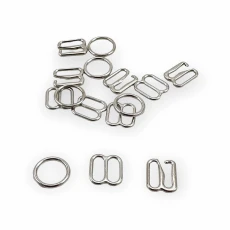
What is the small buckle on a bra strap called? A strap slider adjusts the strap length; a ring connects strap sections; a hook can join a detachable strap to a compatible fitting. These should not be confused with the hook-and-eye closure at the back of a bra. When repairing a strap or selecting parts for a bralette, bikini, corset or lingerie project, begin with the function and the finished elastic width. This guide explains which piece does what, how to choose matching size classes, and how to check that a new component works with the garment you actually have.
Four hardware names you should know
| Component | Purpose | Measurement / fit check |
|---|---|---|
| Strap slider | Adjusts shoulder-strap length | Elastic width and threading |
| Strap ring | Connects strap sections | Internal opening and stitch allowance |
| Strap hook | Attaches a detachable connection | Hook profile and receiver |
| Back-band clasp | Closes the bra body | Hook-and-eye construction, tape width |
| Two- or three-piece set | Supplies matching assembly components | Actual component count and sizing |
Bra strap sliders: how adjustable shoulder straps work
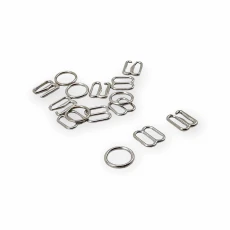
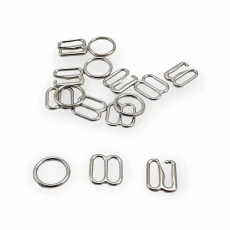
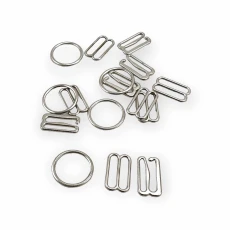
A slider is threaded into the elastic strap so the wearer can shorten or extend its usable length. The opening must be appropriate for the actual elastic; a nominal size alone does not establish the behavior of a folded strap. For example, E-Düğme's 10 mm / 0.39 in zamak bra strap slider is a single component, not a complete back clasp. Its geometry is intended for strap adjustment, not for joining a bra's two back-band wings.
.webp "Close-up of an 8 mm metal bra strap slider")
Bra rings: a connection, not a length adjuster
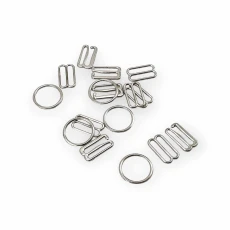
A bra ring holds or redirects the shoulder-strap assembly where elastic joins another strap segment or the garment body. Its opening and shape should accommodate the finished textile band without bunching it up. A ring can be part of a two-piece ring-and-slider set, but adding a ring does not automatically make an incompatible slider fit. Examine the seam thickness, ring orientation and room for the strap to lie flat.
.webp "Real 8 mm zinc alloy bra strap ring product image")
Bra hooks, detachable straps and back closures
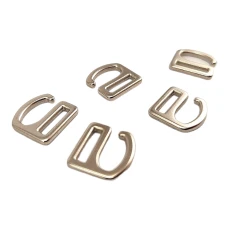
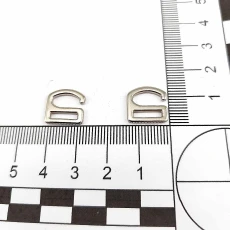
A small metal bra hook can be used where a detachable strap, swimwear fastening or other approved connection is needed. It should engage its intended counterpart without being forced or leaving sharp protrusions against the textile. A rear-band hook-and-eye closure is a different assembly, often using hooks and multiple receiving positions. Search terms such as “bra clasp,” “bra lock” and “bra hook” may refer to several products; check where the part will sit before shopping.
.webp "Real 10 mm metal bra hook product image")
Size classes: 6 mm to 20 mm and beyond
A useful starting point is the finished width of the elastic, not the decorative outside width of the metal. Common references include 6 mm (0.24 in), 8 mm (0.31 in), 10 mm (0.39 in), 12 mm (0.47 in), 15 mm (0.59 in) and 20 mm (0.79 in). The actual usable opening, material thickness and sewing fold can affect how the tape moves. A wider slider may let narrow tape roll or slip; a narrow opening may crumple thick tape. Test a sample instead of assuming the nominal labels guarantee a fit.
Choosing individual parts or complete hardware sets
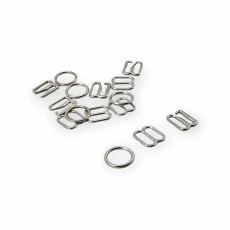
For a repair, replacing only the damaged part may make sense if its geometry matches the surviving ring, hook and elastic. For a newly designed strap assembly, selecting pieces from a coordinated size family can make part identification easier. A typical two-piece selection combines a ring and slider; a three-piece option adds a hook when the design needs a detachable connection. Packaging and quantity vary by listing, so confirm the exact contents.
Materials, surface finishes and garment care
Bra hardware is offered in different metals and coatings, including certain zamak or nylon-coated constructions. Appearance alone does not establish base metal, nickel release, suitability for skin contact, wash resistance or saltwater performance. A relevant supplier specification and tests of the finished garment are needed whenever care performance matters. Evaluate every component alongside the elastic, thread and other textiles.
A five-step fit check before finishing the strap
- Measure the completed elastic, including any fold or seam that passes near the hardware.
- Confirm the slider's threading path using the actual sample.
- Position the ring so the strap connects at the intended angle without twisting.
- Test the hook against its exact receiving piece rather than a similarly sized substitute.
- Check adjustment movement and opening/closing with the finished garment at rest and under normal strap tension.
Frequently asked questions
What is the difference between a bra slider and a ring?
A slider adjusts the length of a threaded elastic strap. A ring is a connection point and does not perform the same length-adjustment function.
What is the clasp at the back of a bra called?
It is usually a back-band closure or hook-and-eye tape assembly. That is different from a small hook attached to an adjustable shoulder strap.
Can I use a 10 mm slider with a 12 mm strap?
Do not assume the fit. Compare finished elastic width with the available opening and test the real strap after folding and sewing.
How do I thread a bra strap through a slider?
Follow the routing for the actual slider design so the elastic can move when adjusted while remaining controlled under normal tension. Verify the path on a sample before sewing.
Does every lingerie strap need a hook?
No. Some designs attach the strap permanently; detachable-strap or convertible designs may use a suitable hook and receiving part.
Is a ring-and-slider set interchangeable with a three-piece kit?
No. A three-piece kit adds a hook, while a two-piece kit contains the adjustment and joining parts. Read the specific package content before ordering.
Are plated or nylon-coated fittings automatically saltwater-safe?
No universal claim is appropriate. Review the exact finish and supplier test documents for the intended care and exposure conditions.
.webp-230x230.webp "10 mm / 0.39 in Bra Strap Adjustment Buckle and Ring PBT0006")
.webp-230x230.webp "10 mm / 0.39 in Bra Strap Adjustment Buckle and Ring PBT0006")
.webp-230x230.webp "8 mm / 0.31 in Zamak Bra Strap Slider PIR710008Z")
.webp-230x230.webp "8 mm / 0.31 in Zamak Bra Strap Slider PIR710008Z")
.webp-230x230w.webp "8 mm / 0.31 in Zamak Bra Strap Ring PIR720008Z")
.webp-230x230.webp "8 mm / 0.31 in Zamak Bra Strap Ring PIR720008Z")
.webp-230x230.webp "8 mm / 0.31 in Zamak Bra Strap Slider, Ring and Hook 3-Piece Set PIR770008Z")
.webp-230x230.webp "8 mm / 0.31 in Zamak Bra Strap Slider, Ring and Hook 3-Piece Set PIR770008Z")
.jpg-230x230.webp "1 cm - 0,39")
.jpg-230x230.webp "1 cm - 0,39")
.jpeg-230x230.webp "10 mm / 0.39 in Gold Zamak Bra Strap Slider and Ring Set, 500 Pairs PBT0006PROMO")
.jpg-230x230.webp "10 mm / 0.39 in Gold Zamak Bra Strap Slider and Ring Set, 500 Pairs PBT0006PROMO")
_7_11zon.jpg-230x230.webp "10 mm / 0.394 in Ball-Tip Sew-On Hook Fastener, 50 Pieces E 1879 PROMO")
_10_11zon.jpg-230x230.webp "10 mm / 0.394 in Ball-Tip Sew-On Hook Fastener, 50 Pieces E 1879 PROMO")
-s1351%20(1%20(6).jpeg-230x230.webp "10 mm 0,39")
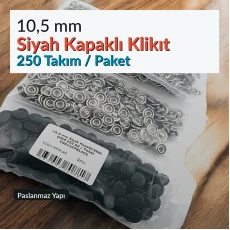
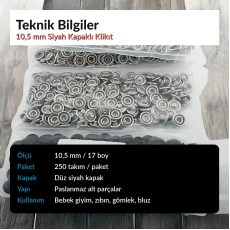
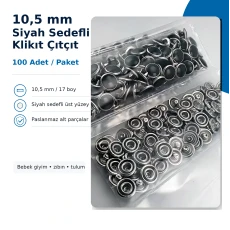
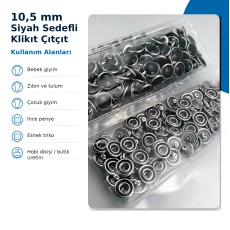
.png-230x230.webp "10.5 mm / 0.41 in Frosted Pearl Stainless Prong Snap Fasteners, 100 Sets/Pack ERBCLK0008BBSD")
.png-230x230.webp "10.5 mm / 0.41 in Frosted Pearl Stainless Prong Snap Fasteners, 100 Sets/Pack ERBCLK0008BBSD")
.png-230x230.webp "10.5 mm / 0.41 in White Pearl Stainless Prong Snap Fasteners, 100 Sets/Pack ERBCLK0008BSD")
.png-230x230.webp "10.5 mm / 0.41 in White Pearl Stainless Prong Snap Fasteners, 100 Sets/Pack ERBCLK0008BSD")
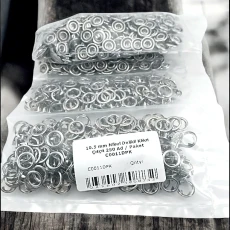
.jpeg-230x230.webp "10.5 mm Stainless Steel Nickel-Plated Perforated Snap Fastener, 250 Pieces/Pack C0011DPK")
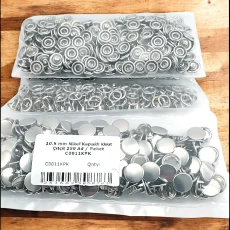
.png-230x230.webp "10.5 mm Stainless Steel Nickel-Plated Snap Fasteners, 250 Pieces/Pack C0011KP")
.png-230x230.webp "100 m / 328.08 ft N5 / #5 Nylon Coil Zipper Chain Set with 50 Single-Pull Sliders for Workshops SET-T10T-NAYLON-100M50C")
.png-230x230.webp "100 m / 328.08 ft N5 / #5 Nylon Coil Zipper Chain Set with 50 Single-Pull Sliders for Workshops SET-T10T-NAYLON-100M50C")
.webp-230x230.webp "12 mm / 0.47 in Silver (Nickel) Stainless Domed Eyelet – 100-Piece Pack ER0026P100")
.webp-230x230.webp "12 mm / 0.47 in Silver (Nickel) Stainless Domed Eyelet – 100-Piece Pack ER0026P100")
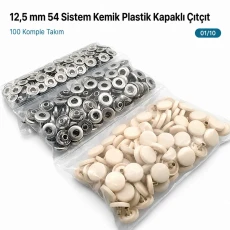
_7.jpg-230x230.webp "12.5 mm / 0.49 in 54 System Light Bone Plastic Capped Snap Fastener 100 Sets ERC00125PLKemik")
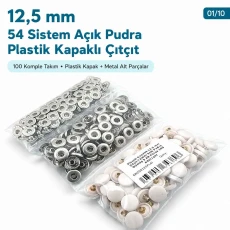
_4.jpg-230x230.webp "12.5 mm / 0.49 in 54 System Light Powder Plastic Capped Snap Fastener 100 Sets ERC00125PLAPudra")
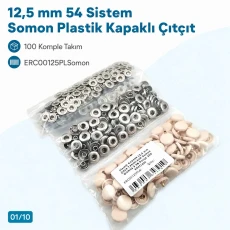
_10.jpg-230x230.webp "12.5 mm / 0.49 in 54 System Light Salmon Plastic Capped Snap Fastener 100 Sets ERC00125PLSomon")
Leave a Comment