



Pants, Skirts and Dress Zippers
Pants, skirts and dress zippers include Type 5 nylon closed-end, Type 3 invisible, longer invisible and metal-tooth zipper families. Choose by garment use, zipper construction, length, color and end style rather than length alone.
Check current size and color availability on the product page. Invisible and nickel-tooth subcategories provide narrower choices when the required construction is already known.
ZIPPER SELECTION CENTER
What do you want to make?
When choosing a zipper, first define the application area, then check the zipper type, length, tooth construction, opening style and color match. Open-end zippers are preferred for jackets and coats; closed-end or invisible zippers are used for trousers, skirts and dresses; continuous zipper chain or water-resistant zippers are suitable for bags, tarpaulins and technical textile products.
Scroll sideways to choose the most suitable zipper group for your application.
01 COATS • JACKETS • OUTERWEAR I need a zipper for a coat, jacket or sweatshirt Explore open-end, separating, #5, #8, #10, molded plastic and nylon coil jacket zippers by length. View jacket zippers 02 TROUSERS • SKIRTS • DRESSES I need a zipper for trousers, skirts or dresses Choose closed-end, invisible, tulle-tape and fine-tooth garment zippers according to the fabric and closure type. View garment zippers 03 CONTINUOUS • BY THE METRE • PRODUCTION I want to prepare zippers in custom lengths Continuous zipper chain is cut to size for bags, covers, tarpaulins, tents, awnings and technical textile production. View continuous zippers 04 BAGS • WALLETS • POUCHES I need a zipper for wallets, bags or small pockets Select suitable zippers for wallets, cosmetic bags, organizers, pencil cases, inner pockets and small pouches. View wallet zippers 05 WATER-RESISTANT • SPECIAL I need an outdoor or special-purpose zipper Explore specialty zippers for reverse openings, O-shaped closures, mesh-tape designs, technical outerwear and non-standard zipper constructions. View specialty zippers 06 REPAIR • PARTS • ACCESSORIES I need a slider, puller or zipper part Check zipper sliders, stops, pullers and finishing parts according to zipper type, tooth size and repair requirement. View zipper parts
Selection tip: Do not choose a zipper by length alone. Tooth type, open-end or closed-end construction, slider type, tape color, tooth color and application area should be checked together.


ZIPPER SELECTION CENTRE
Find the Right Zipper for Your Application
Compare zippers for jackets, coats, trousers, skirts, dresses, bags, wallets, covers, tents and specialist textile projects. In addition to length and colour, check the open-end or closed-end construction, tooth type, chain size, slider system and intended application before choosing.
FULLY OPENING GARMENTS
Jacket, Coat and Outerwear Zippers
Browse open-end zippers for jackets, coats, parkas, waistcoats, cardigans and hooded sweatshirts. Compare nylon coil, moulded plastic, metal-look, two-way and water-repellent zipper options according to garment weight, opening function and required appearance.
Browse outerwear zippers →FIXED-BOTTOM GARMENT CLOSURES
Trouser, Skirt and Dress Zippers
Compare closed-end zippers for trousers, shorts, skirts, dresses, tunics and eveningwear. Choose between invisible nylon and visible metal-tooth constructions according to fabric weight, closure length and the required finished appearance.
Browse garment zippers →CUSTOM LENGTH AND PRODUCTION
Continuous Zipper Chain by the Metre
Browse continuous zipper chain for custom lengths, production work, bags, tarpaulins, tents, awnings, vehicle covers, equipment cases and technical textiles. Compatible sliders, stops and final end construction must be planned with the chain.
Browse continuous zippers →COMPACT AND SHORT CLOSURES
Wallet, Pouch and Pocket Zippers
Browse compact zippers for wallets, card holders, pencil cases, cosmetic bags, organisers, bag compartments and pockets. Check the closure length, tape width, slider direction and thickness of the fabric, leather or synthetic material before ordering.
Browse wallet zippers →NON-STANDARD CONSTRUCTIONS
Specialty Zipper Designs
Explore reverse, mesh-tape, O-shaped, two-way and other specialist zipper constructions intended for non-standard closures. Select the zipper according to its operating direction, closure shape and the construction of the finished product.
Browse specialty zippers →ASSEMBLY, REPAIR AND FINISHING
Zipper Parts and Accessories
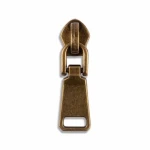
Browse zipper sliders, top stops, bottom stops, open-end boxes, insertion pins and other components used for zipper assembly, finishing and repair. Every component must match the exact zipper construction and chain size.
Browse zipper components →EASIER GRIP AND DESIGN
Zipper Pulls and Pullers
Browse metal, plastic, rubber and decorative zipper pulls used to improve grip or add a visible design detail. Compare the pull attachment opening with the hole and construction of the existing zipper slider before choosing.
Browse zipper pullers →COMPLETE ZIPPER COLLECTION
All Zipper Types
Compare ready-made and continuous zippers by length, colour, tooth construction, end type, slider arrangement and intended application. Find the appropriate zipper group for garments, bags, covers and specialist textile projects.
Browse all zippers →✓
Browse Compatible Zipper Parts → Do not select a zipper by length and colour alone
Use an open-end zipper where both sides must separate completely, and a closed-end zipper where the bottom remains fixed. Check the tooth construction, chain size, slider direction and seam allowance. For continuous zipper chain, compatible sliders and end-finishing parts must be selected separately.
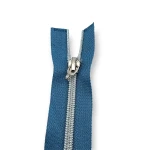
Pants, skirts and dress zippers include several distinct product families rather than one universal zipper type. The live range contains Type 3 invisible zippers, Type 5 nylon closed-end trouser/skirt zippers, metal-tooth trouser zippers and longer invisible zipper families for skirts and dresses. Selection should consider zipper construction, tooth/coil type, end style, length, color and garment application together.
Which zipper type fits pants, skirts or dresses?
Closed-end nylon or metal zippers are common in trouser and traditional skirt openings, while invisible zippers are often chosen for dresses and skirts where a lower-visibility seam finish is preferred. The right option depends on fabric weight, seam allowance, opening length and the desired appearance. Two zippers with the same length can behave differently if their coil or tooth structure is different.
Live product families
| Family | Live examples | Typical direction |
|---|---|---|
| Type 5 nylon closed-end | ZPS0014T5, ZPS0016T5, ZPS0018T5, ENC0016T5, ENC0018T5 | Trouser and skirt openings |
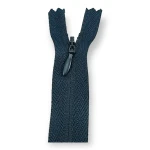
| Type 3 invisible | ZP0007PROMO, ZP0012PROMO and related | Lower-visibility skirt and dress seams |
| Invisible tulle/coil family | ZPG0018TUL–ZPG0070TUL | Dress and skirt applications |
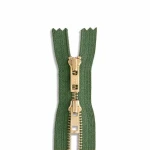
| Metal-tooth trouser zipper | ZPM0001PNT | Visible metal-tooth trouser closure |
| Nickel-tooth subgroup | Category 74 metal-tooth variants | Applications requiring metal-tooth appearance |
What do Type 3 and Type 5 mean?
Type numbers identify zipper families and construction classes. Type 3 invisible zippers and Type 5 nylon trouser/skirt zippers are common in this category, but other type numbers can also appear in the broader taxonomy. Do not select by type number alone; combine it with length, end style and garment use.
When is an invisible zipper appropriate?
An invisible zipper is used when the teeth should remain less visible within the seam. It is common in dresses, skirts and tailored garments where a cleaner exterior line is desired. Sewing quality also depends on the correct presser foot, seam preparation and fabric stability.
Nylon versus metal tooth
Nylon coil zippers can offer a more flexible feel and are widely used in everyday garments. Metal-tooth zippers provide a different visual character and mechanical feel. The best option depends on design, fabric structure and the intended garment finish rather than one construction being universally better.
What is a closed-end zipper?
A closed-end zipper, also described as a bottom-closed style, does not separate completely at the lower end. It is common in trouser flies, skirt openings and many dress applications. Open-end separating zippers are used for different products such as jackets and coats.
How to choose zipper length
The live range includes 14 cm / 5.51 in, 16 cm / 6.30 in, 18 cm / 7.09 in, 20 cm / 7.87 in, 22 cm / 8.66 in, 25 cm / 9.84 in and substantially longer invisible zipper options. Measure the actual pattern opening instead of choosing only by garment name. Pants may use shorter lengths, while dresses can require a longer side or back opening.
Color selection
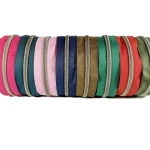
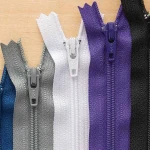
Zipper tape color can affect the visible seam even with an invisible zipper. A tone close to the fabric creates a quieter look, while contrast may be intentional in some designs. Live products include navy, mustard, white, gray, cream, lilac and other tones. Not every color is available in every length, so current options must be checked per product.
Use the invisible and nickel-tooth subcategories
If your priority is a concealed dress or skirt zipper, the Invisible Zippers subgroup is the fastest path. If you specifically need visible metal teeth, the Nickel-Tooth Zippers subgroup narrows the range more effectively. The parent category is best used to compare major construction types.
Fabric weight matters
Lightweight fabric can be affected more visibly by zipper tape and seam tension. Heavier fabric may require a different construction choice. Stretch, drape and seam allowance also influence the result. Test the zipper on the actual production fabric before a long batch.
First-sample sewing checks
- Does the zipper length match the pattern opening?
- Does the tooth or coil line remain straight?
- Is the fabric free from puckering or pulling?
- Does the slider move smoothly?
- Are top and bottom endpoints positioned correctly?
- For invisible zippers, is visibility within the target level?
Use model codes for repeat orders
Codes such as ZPS0016T5, ZPG0035TUL, ENC0016T5 and ZPM0001PNT are more reliable production references than a generic note like “16 cm zipper.” Record the model, length, type, color and fabric together to make repeat orders easier to reproduce.
Data-quality note about category assignments
The live category mapping also includes some pocket, jacket, coat, cardigan and outerwear zippers that are linked to other relevant categories as well. These products should not be treated as the core pants/skirt/dress family simply because they are attached to this parent category. On E-Düğme, use the actual product name and intended application as the primary guide. The category assignment structure should be reviewed separately as a taxonomy-quality task.
Common selection mistakes
Common errors include selecting only by length, treating invisible and standard nylon zippers as interchangeable, ignoring metal-versus-nylon construction, and skipping a sewing sample with the production fabric. Another mistake is assuming every color and length combination is always in stock. Live product pages remain the source for current stock and option details.
Frequently asked questions
What zipper type is used for trousers?
The live range includes Type 5 nylon closed-end and metal-tooth trouser zippers. The right choice depends on design and fabric.
Is an invisible zipper suitable for dresses?
Yes, especially when a lower-visibility seam closure is desired.
Are Type 3 and Type 5 the same?
No. They identify different zipper families and should be checked with construction and use.
How do I choose between 14 cm and 18 cm?
Measure the pattern opening. Garment type alone does not determine the correct length.
Is every color available in every length?
No. Options vary by product.
Metal or nylon: which is better?
Neither is universally better. Choose according to garment design, fabric and desired appearance.
Does color matter with an invisible zipper?
Yes. A close tape color can help maintain a quieter seam appearance.
Should I sew a sample before production?
Yes. Test the actual zipper and production fabric together.
A practical buying sequence
Start with garment use: pants, skirt or dress. Next choose the zipper construction: invisible, nylon closed-end or metal tooth. Measure the actual opening to select length, then choose an appropriate color and confirm stock on the product page. This sequence is more reliable than selecting by length alone.
Pre-sewing inspection
Before sewing, check the tape for distortion, inspect the teeth or coil for damage and move the slider through its full travel. Early inspection can identify a defective piece before it is sewn into the garment.
Repeat-order references
Keep the model code, color, length, type and garment pattern reference together on the production card. This reduces ambiguity when the same style returns in a later season.
Use subcategories to narrow selection
The parent category is useful for comparing construction families, while invisible and nickel-tooth subcategories provide a narrower path when the required zipper structure is already known.
Pre-sewing inspection
Before sewing, check the tape for distortion, inspect the teeth or coil for damage and move the slider through its full travel. Early inspection can identify a defective piece before it is sewn into the garment.
Compare live product examples
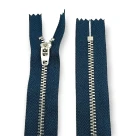
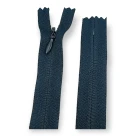
To compare the major constructions on live product pages, review the 18 cm / 7.1 in invisible zipper and the 18 cm / 7.1 in metal pants zipper. These examples make it easier to see the difference between an invisible zipper and a metal-tooth trouser zipper at product level.