What Is a Jacket Zipper?
A jacket zipper is a zipper designed for the front opening of garments such as jackets, coats, parkas, vests, hoodies and sweatshirts. In most front-opening outerwear designs, the zipper must separate completely at the bottom so the garment can be opened, worn and removed easily.
For this reason, jacket zippers are commonly made with an open-end separating construction. When the zipper is fully opened, the two zipper tapes detach from each other at the lower end. This differs from a closed-end zipper, where the bottom stop keeps both sides permanently connected.
Jacket zipper selection should not be based on length alone. The zipper size, tooth construction, tape colour, slider style, end type, garment fabric and intended use all affect the final result. The current range includes nylon coil, antique-brass-look, molded plastic and water-repellent zipper options for different outerwear constructions.
What Types of Jacket Zippers Are Available?
Different jacket constructions require different zipper styles. A lightweight hoodie does not need the same zipper profile as a heavy coat, a technical shell jacket or a children’s puffer vest.
Nylon Coil Jacket Zippers
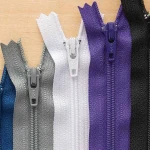
Nylon coil jacket zippers are flexible, lightweight and suitable for many everyday outerwear applications. They are commonly used in hoodies, sweatshirts, lightweight jackets, children’s outerwear, vests and casual coats.
Nylon coil teeth create a softer and more flexible zipper line than large molded teeth. This can be useful where the garment needs to remain comfortable, lightweight and easy to fold. The 71 cm / 27.95 in #6 Nylon Coil Sweatshirt Zipper is an open-end option for hoodies, track tops and lightweight jackets.
Antique Brass Jacket Zippers
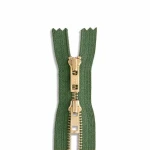
Antique brass jacket zippers are chosen when the zipper is intended to remain visually noticeable as part of the garment design. They can suit denim jackets, vintage-inspired outerwear, workwear-style garments, parkas, vests and designs that benefit from a warmer metallic zipper appearance.
When selecting an antique brass zipper, compare the zipper tape colour, tooth finish and slider appearance with the actual fabric. Dark denim, black, khaki, brown, tobacco, navy and washed cotton fabrics can all create different visual results with antique brass-toned teeth.
Molded Plastic Jacket Zippers
Molded plastic jacket zippers have more visible, structured teeth and are commonly selected for jackets, coats, parkas, sportswear, children’s outerwear and bags. Depending on the model, this product group can include standard molded teeth, corn teeth, metal-look teeth and metallized tooth finishes.
Molded zipper construction can create a stronger visual line on the garment. It is often suitable when the zipper is intended to be a visible outerwear detail rather than a discreet closure. Browse Molded Plastic Jacket Zippers to compare different tooth styles, end types and lengths.
Water-Repellent Jacket Zippers
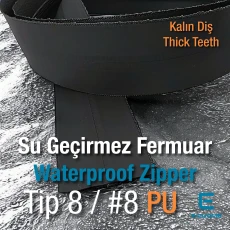
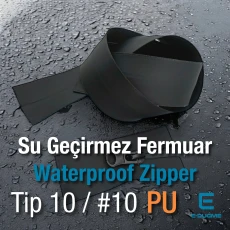
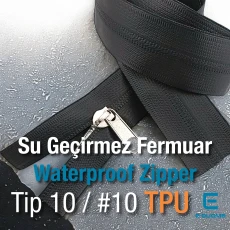
Water-repellent jacket zippers are used in outerwear, rainwear, softshell garments, technical jackets, parkas and selected bag applications where reducing direct water entry through the zipper area is useful. These zippers may use a coated surface such as TPU or similar water-repellent construction, depending on the product.
A water-repellent zipper can help reduce water penetration through the zipper line, but it does not automatically make the finished jacket or bag fully waterproof. Fabric construction, seams, needle holes, seam sealing, lining, flap design and garment pattern all affect overall water resistance.
For technical outerwear and coated zipper options, browse Water-Repellent Jacket Zippers.
What Does Open-End or Separating Zipper Mean?
An open-end zipper, also called a separating zipper, has a starter box and insertion pin at the bottom. This construction allows both zipper tapes to separate completely when the zipper is opened.
Open-end zippers are required for garments that must open fully at the front, including jackets, coats, parkas, hoodies, vests and long outerwear. A closed-end zipper cannot replace an open-end zipper for this purpose because its bottom stop keeps both sides joined together.
| Zipper End Type | Typical Applications | Main Function |
|---|
| Open-End / Separating | Jackets, coats, parkas, hoodies, vests and outerwear fronts | Allows the zipper tapes to separate completely for full front opening. |
| Closed-End | Trousers, skirts, dresses, pockets, wallets, bags and pouches | The bottom remains fixed, so both zipper tapes stay connected. |
| Two-Way / Combi | Long coats, parkas, technical outerwear and selected garment designs | Provides standard top opening plus additional lower opening flexibility. |
How to Choose the Correct Jacket Zipper Length
Measure the real front closure line of the garment—not the total garment length. If you are replacing an existing zipper, measure it while it is closed from the top stop to the bottom separating component. For a new garment, measure the zipper placement line in the pattern and consider seam allowance, neckline placement and hem construction.
- Short zipper lengths: Often suitable for children’s jackets, cropped jackets, bomber jackets, vests and short hoodies.
- Medium zipper lengths: Often used for standard jackets, hoodies, sweatshirts and lightweight coats.
- Long zipper lengths: Suitable for long coats, parkas, long hoodies and outerwear with extended front closures.
A zipper that is too short can make the garment difficult to wear or leave the front opening incomplete. A zipper that is too long can create fitting problems at the neckline, hem or lower front construction. Always compare the zipper length with the actual pattern before ordering.
How to Choose Zipper Size for Jackets and Coats
Zipper size affects the visual weight, flexibility and expected usage level of the garment. The correct choice depends on fabric thickness, garment type, expected opening frequency and the visual effect you want to achieve.
| Zipper Size Group | General Use Direction | What to Consider |
|---|
| #5 | Light jackets, vests, children’s outerwear, casual jackets and moderate-use outerwear | Fabric thickness, front opening length and required flexibility |
| #6 | Hoodies, sweatshirts, sportswear, lightweight jackets and everyday outerwear | Comfort, zipper visibility and the width of the sewing line |
| #9 and #10 | Heavier jackets, parkas, coats, thick outerwear and more prominent front closures | Garment weight, intended use, zipper bulk and tooth appearance |
This table is a practical selection guide, not a substitute for checking the individual product. Tooth construction, tape width, slider type, zipper length and fabric structure should always be reviewed together.
How to Match a Jacket Zipper with the Fabric
The zipper tape should sit comfortably within the garment’s front seam construction. A thick zipper on a very lightweight fabric can create stiffness, puckering or an unbalanced appearance. A very light zipper on a heavy coat may not provide the required visual or functional strength.
Before production, compare the zipper with the actual fabric, lining and seam construction. Check how the zipper bends, how the tape sits when sewn, how the slider moves and whether the tooth profile suits the overall garment style.
- Use a lighter, more flexible zipper construction for lightweight hoodies and casual garments.
- Use more visible molded or metal-look teeth where the zipper is a deliberate design feature.
- Choose water-repellent zipper options for technical outerwear where the zipper line needs additional water resistance.
- Check colour harmony between the zipper tape, teeth, slider finish and the garment fabric.
Why Tape Colour, Tooth Colour and Slider Style Matter
A jacket zipper is usually visible on the front of the garment. Tape colour, tooth colour and slider style can either blend into the fabric or become part of the design.
For a more understated appearance, choose a tape colour close to the garment fabric and a tooth colour that does not create strong contrast. For a more expressive outerwear design, use metallic, antique brass, molded or contrasting teeth as a visible design element.
The slider should also suit the garment. A larger pull can be easier to use on jackets, outdoor garments and gloves-friendly applications. A more compact slider may be preferred for lightweight garments where a minimal appearance is required.
Replacing a Jacket or Coat Zipper
When replacing a zipper in an existing jacket or coat, matching the length is only one step. The replacement zipper should also have the correct end type, suitable tooth size, compatible tape width and an appropriate separating bottom construction.
- Confirm that the old zipper is open-end/separating.
- Measure the zipper while closed from the top stop to the bottom separating section.
- Compare zipper tape width with the existing seam allowance and stitching line.
- Check the garment’s fabric thickness, lining structure and front construction.
- Compare tape colour, tooth colour and slider finish with the garment.
- Test the zipper placement with pins or basting before final sewing.
Common Mistakes When Choosing Jacket Zippers
- Using a closed-end zipper for a jacket or coat front.
- Choosing zipper length by guessing from the total garment length.
- Selecting a zipper only by colour without checking end type, tooth construction and fabric compatibility.
- Using a lightweight zipper for a thick or high-use outerwear garment without testing it.
- Assuming that all #5, #6 or #10 zippers have the same construction and intended use.
- Choosing a water-repellent zipper and assuming that it makes the entire garment waterproof.
- Ignoring the visual effect of zipper tape, tooth colour and slider finish.
- Starting bulk production without testing the zipper on the actual garment fabric and seam structure.
Related Categories and Products
Frequently Asked Questions
What type of zipper is used for a jacket or coat front?
Jackets, coats, parkas, vests and hoodies that need to open fully at the front use an open-end separating zipper.
Can I use a closed-end zipper for a jacket?
No. A closed-end zipper does not separate at the bottom, so it is not suitable for a front-opening jacket or coat. Closed-end zippers are better for pockets, trousers, skirts, bags and wallets.
How do I measure a jacket zipper?
Close the zipper and measure from the top stop to the bottom separating component. For new garment production, measure the actual zipper placement line in the pattern and consider seam allowance and front construction.
Which zipper size should I choose for a hoodie?
A #5 or #6 zipper can be suitable for many hoodie and sweatshirt designs, depending on the fabric weight, required visual effect and intended frequency of use. Always compare the zipper with the actual garment construction.
Which zipper is better for a heavy coat or parka?
Heavier outerwear may require a more substantial zipper construction, such as a larger nylon coil, molded plastic zipper or another outerwear-oriented style. The correct choice depends on fabric weight, garment length and design requirements.
Does a water-repellent zipper make a jacket waterproof?
No. A water-repellent zipper can reduce direct water entry at the zipper line, but full waterproof performance depends on fabric, seams, needle holes, seam sealing and the complete garment construction.
Can I replace an old jacket zipper with a different zipper type?
Only when the new zipper has a compatible open-end structure, length, tape width and tooth profile for the garment. Check the existing seam construction and test the replacement zipper before sewing.