Manual Impact Press Light Type for Eyelet, Snap and Jeans Button Applications
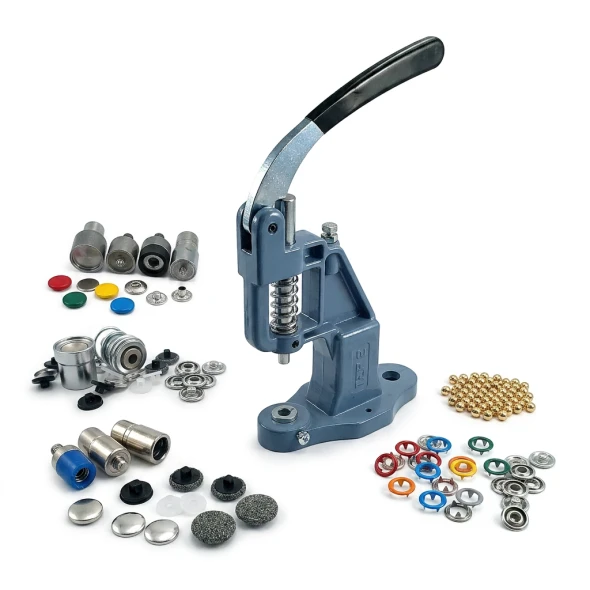
This Manual Impact Press Light Type is a lever-operated press designed for controlled impact applications in textile accessories, leather goods, footwear, advertising, signage, packaging and industrial assembly work. It can be used with compatible dies for eyelets, snaps, jeans buttons, rivets, hooks, fabric button covering, punching, stamping, marking and similar workshop operations.
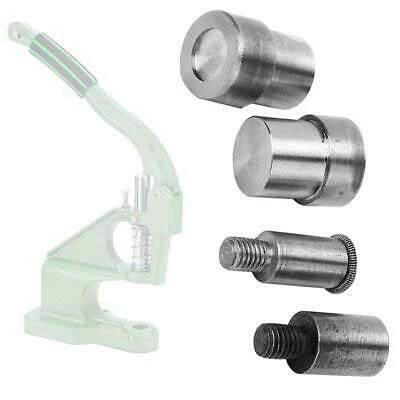
The press does not set every accessory by itself. Each application requires the correct upper and lower die for the selected accessory type, size and material. For a clean result, die connection, centre alignment, material thickness, accessory geometry and striking force must be evaluated together.
Cast Iron Body and Machined Structure
The press body is made from cast iron and consists of two cast components. The body and connection surfaces are machined on CNC equipment. The metal components are produced from heat-treated and quenched parts to support stable operation during repeated impact applications.
This structure helps the press work more steadily when the dies are correctly centred. Proper alignment is especially important for eyelets, snaps, jeans buttons, rivets and fabric-covered buttons, where off-centre pressure can damage the accessory or deform the material.
Adjustment and Setup
The machine is prepared by installing the upper and lower die, then adjusting the centre alignment. The Allen screw at the rear of the upper body is loosened for right-left and height adjustment. The lower die holder allows front-back alignment.
After these settings are completed, the material is placed between the upper and lower die seats are completed, the material is placed between the upper and lower die seats and the operation is performed with the lever impact. Die changing is a fast operation when the die connection is compatible, but centre alignment should be checked after every die change.
Application Areas
- Eyelet applications in banners, tarpaulins, textiles and leather goods
- Snap fastener setting in garment and accessory production
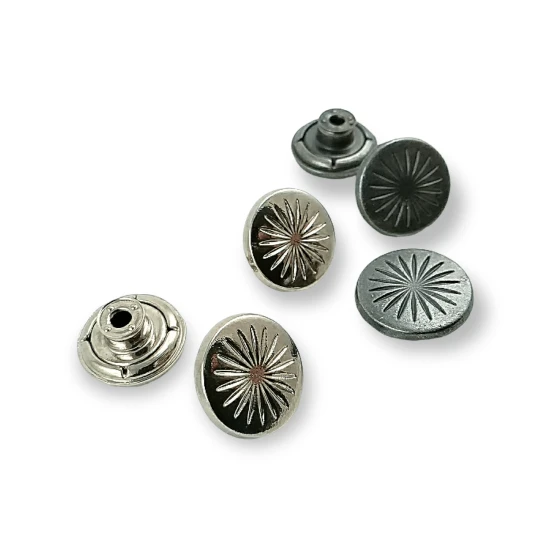
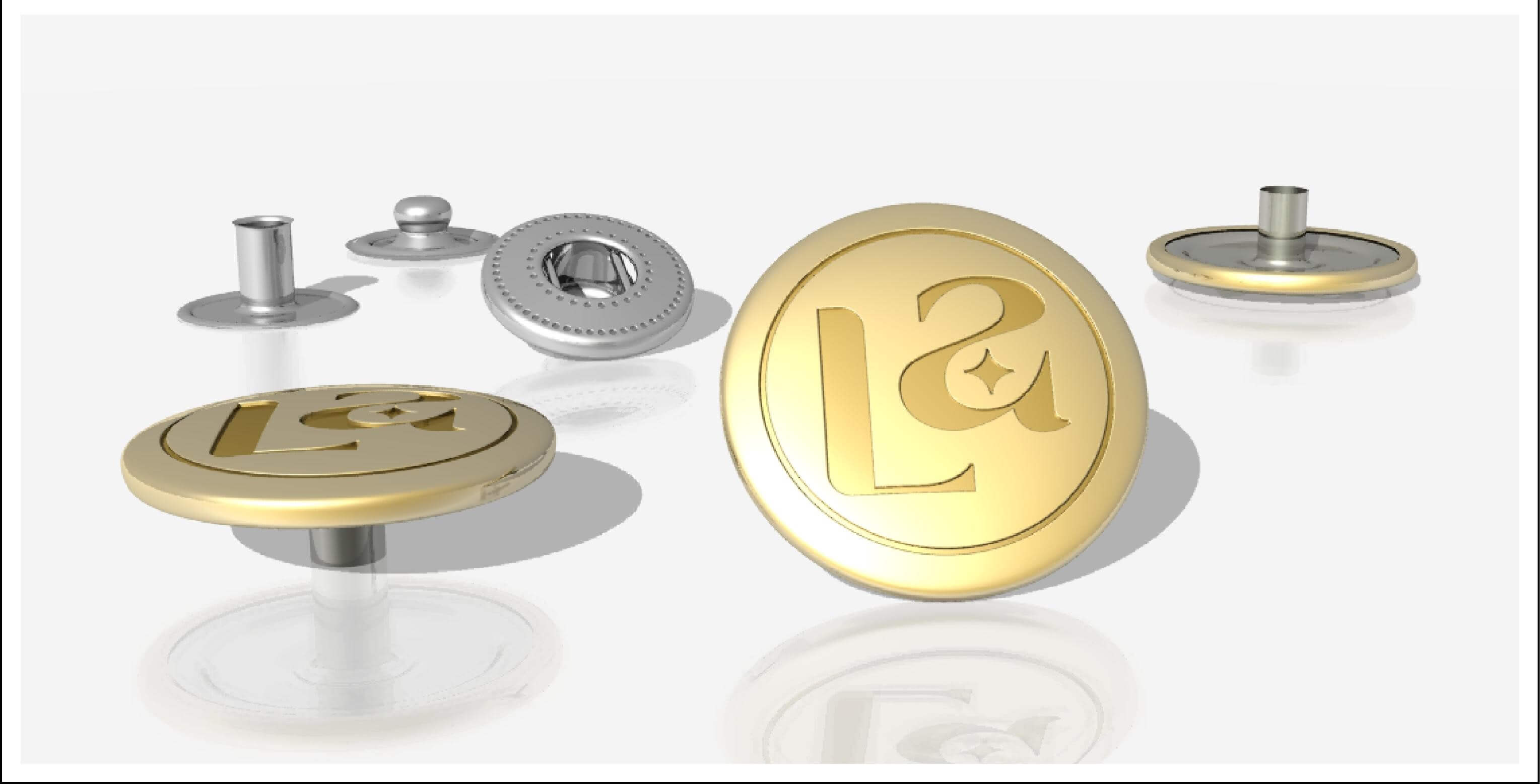
- Jeans button application in denim and apparel manufacturing
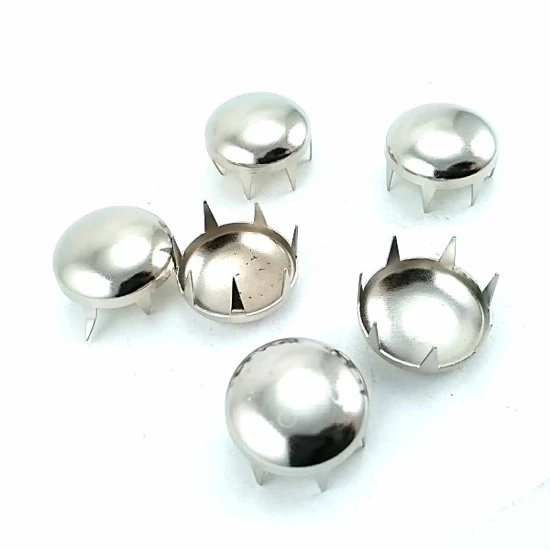
- Rivet and hardware setting for bags, belts, wallets and leather accessories
- Hook and eyelet work in footwear and slipper production
- Fabric button covering applications
- Advertising, signage, banner and vinyl print workshops
- Electrical, electronic, door, window, aluminium, shutter and packaging assembly
- Marking, punching, stamping, bending, cosmetic and toy assembly work
Maintenance
The moving vertical shaft system should be cleaned and lubricated with grease once a week. In intensive workshop use, maintenance may be required more frequently. Textile dust, metal particles and residues around the die area should be cleaned before operation.
Application Sequence
- Select the accessory or operation type.
- Choose the matching upper and lower die.
- Install the dies into the press.
- Adjust right-left alignment and height from the upper body.
- Adjust front-back alignment from the lower die holder.
- Place the material correctly between the upper and lower die seats.
- Apply controlled lever impact.
- Inspect the accessory surface, reverse-side closure and material condition.
Frequently Asked Questions
What can this press be used for?
It can be used with compatible dies for eyelets, snaps, jeans buttons, rivets, hooks, fabric button covering, punching, stamping and similar impact applications.
Does it require electricity?
No. It is a manual lever impact press and does not require electric or pneumatic power.
Are dies included?
No. Dies and accessories must be selected separately for each application.
Can the height be adjusted?
Yes. The upper body allows height and right-left adjustment, while the lower die holder allows front-back alignment.
How often should it be maintained?
The moving shaft system should be cleaned and lubricated with grease once a week, or more often in intensive use.
Can one machine be used for different jobs?
Yes. Different operations can be performed by changing compatible dies, but alignment and die connection must be checked after each change.
When to Use a Manual Impact Setting Press
Light-Duty Manual Impact Press M00100 is intended for striking operations such as eyelet setting, snap fastening, rivet setting and jeans button installation. It is particularly recommended for No. 31 and smaller eyelets and size 28 buttons with matched dies. Higher-force applications such as No. 34 and larger eyelets are better assessed for the Heavy-Duty Manual Eyelet Setting Press M00101, which uses longer-lever controlled pressure instead of impact.
Adjustable Impact Force, Center and Working Height
Set the striking force, center alignment and working height to suit the hardware and material. Test on a sample before production. A typical target workload of approximately 250 to 4,000 operations per day depends on the operator, fabric, die changes and production layout; it is not a guaranteed machine speed.
Compatible Dies and Manufacturer Support
The press can work with suitably fitting eyelet setting dies, snap and rivet dies, button tools and compatible punching dies. Confirm connection dimensions and material requirements before use; not every die is automatically interchangeable. The manufacturer supplies spare parts and makes dedicated dies and attachments. Setting dies and fasteners are not included by default.
Buyer Questions
Can Light-Duty Manual Impact Press M00100 set No. 34 eyelets?
It is primarily recommended through No. 31. For No. 34 or larger, consider the Heavy-Duty Manual Eyelet Setting Press M00101.
Does one machine set eyelets, snaps and rivets?
Yes, with the correct separate dies for each item and size.
Can a workshop perform 4,000 settings a day?
The stated 250–4,000 daily range is a production planning target, not a guaranteed rate.
Are impact force and tool alignment adjustable?
Yes; force, center and working height may be adjusted.
Are spare parts and custom attachments available?
Yes; dedicated tools and machine spare parts are produced by the supplier.





 Not sure about the size?Ask before you order — we'll help you pick the right size and matching setting tool.We're online · Mon–Fri 09:00–18:00, Sat 09:00–13:00 (GMT+3)Ask on WhatsApp☎ +90 530 520 40 09Get a bulk quote →★ 4.6 customer rating · 2,100+ orders · office & store in Istanbul