Pin Buckles, Center Bar Buckles and Belt Buckles
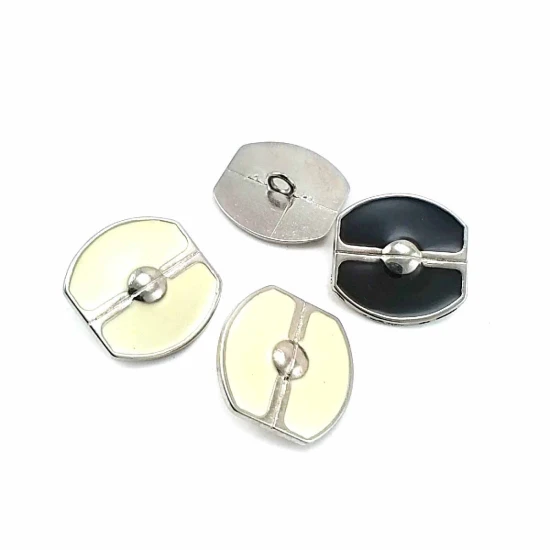
Pin buckles, center bar buckles, belt buckles and bag strap buckles are used where a strap needs to close through prepared holes. The moving pin passes through the selected hole in the strap and holds the strap at the required length. This structure is widely used in belts, bag flaps, leather straps, footwear, sandals, slippers, watch straps, pet collars, leashes and decorative accessories.
These buckles are not only selected for closure. Their frame shape, center bar structure, pin position, width and plating also affect the appearance of the finished product. A narrow shoe buckle may be suitable for an 8 mm / 0.31 in or 10 mm / 0.39 in strap, while a wider center bar buckle can be used on bag straps, belts and larger leather-accessory designs.
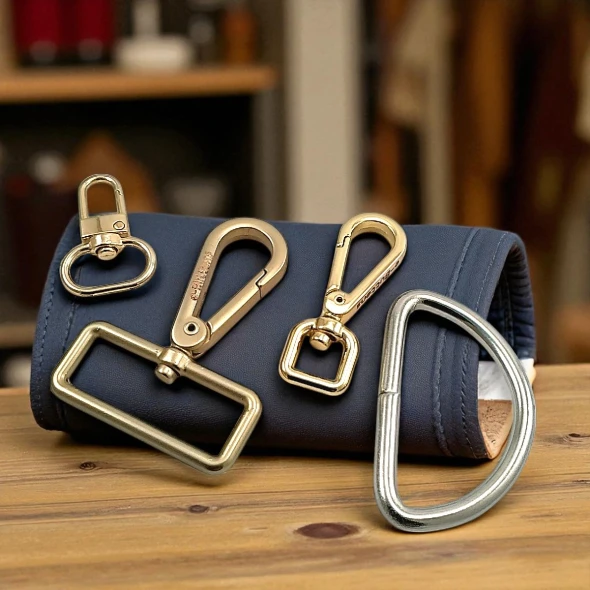
For a complete hardware system, the buckle should be planned together with the rings, hooks, rivets and other visible metal parts used on the same product. Browse the wider bag buckles, rings and hooks collection to match buckle, ring, hook and strap hardware in one system.
What Is the Difference Between a Pin Buckle and a Center Bar Buckle?
A pin buckle is defined by its movable pin that passes through the strap hole to create the closure. A center bar buckle is a buckle structure where the central bar supports the strap route and positions the pin within the frame. Many center bar buckles also use a pin, but the center bar changes how the strap folds, sits and moves through the buckle.
Both are suitable for belts, bag straps, footwear and leather accessories. The right choice depends on strap width, strap thickness, desired appearance, hole placement and the way the strap will be folded or fixed to the buckle frame.
| Buckle Type |
Main Function |
Typical Use |
| Pin Buckle |
Closes a perforated strap through a movable pin |
Belts, collars, bag straps, footwear and leather accessories |
| Center Bar Buckle |
Guides the strap through a central frame structure while positioning the pin |
Belts, bags, shoes, decorative straps and leather goods |
| Belt Buckle |
Secures medium or wide belt straps |
Leather belts, fabric belts, pet collars and fashion accessories |
| Bag Strap Buckle |
Closes or decorates bag straps and bag-flap systems |
Handbags, shoulder bags, backpacks and leather bags |
| Shoe Buckle |
Secures narrow straps |
Shoes, sandals, slippers, watch straps and fine accessories |
Shoe Buckles for Narrow Straps
Shoe buckles are compact metal buckles used for narrow shoe straps, sandals, slippers, fine wrist straps and decorative footwear details. They are commonly selected for smaller strap widths where the buckle must remain functional without overpowering the design.
For narrow strap projects, do not select only by width. Check the strap thickness, buckle-frame height, pin length and the size of the prepared holes. A buckle may match the strap width but still be unsuitable when the strap is thick, folded or made from layered material.
Use narrow buckles where the product needs a visible perforated closure. For designs that need fast opening and closing rather than hole-by-hole adjustment, browse slider buckles and side-release buckle systems.
Center Bar Buckles for Belts and Bag Straps
Center bar buckles are suitable for leather belts, bag straps, shoe straps, collars and decorative strap systems. The central bar creates a defined strap route and positions the pin inside the buckle frame. This makes center bar designs useful where both the mechanical closure and the visible buckle form matter.
When choosing a center bar buckle, check the usable inner width, center bar thickness, frame height and strap-folding method. The strap normally folds around one side of the buckle frame, while the pin enters a prepared hole on the working side of the strap.
For bag strap applications, a center bar buckle can be combined with D rings, O rings and frame rings to create fixed connection points. Where the strap must also be removable, add compatible snap hooks, carabiner clips or swivel hooks.
Belt Buckles for Leather and Fabric Belts
Belt buckles are used for leather belts, fabric belts, pet collars, utility straps and fashion accessories. Their main compatibility measurement is the usable inner width of the buckle frame. The strap should pass through the frame without excessive side movement or compression.
The outside size of a belt buckle affects visual scale, but it does not alone determine strap compatibility. A large decorative buckle may still be designed for a narrow strap, while a compact buckle may have a wider usable strap opening. Always check the inner strap width and the frame height before selecting the buckle.
For belts or straps that need other visible metal fittings, the buckle finish should be coordinated with rings, hooks, rivets and chain details. Matching the plating family gives the finished product a more consistent appearance.
Bag Strap Buckles and Decorative Bag Closures
Bag strap buckles can be used on shoulder straps, flap straps, decorative tabs, detachable bag details and adjustable leather straps. In some bag designs, the buckle is mainly visible and decorative, while a hidden snap or magnetic closure provides the everyday opening function.
For a bag flap, a pin buckle can create the visible buckle detail while a matching snap fastener or magnetic snap supports quicker closing behind the strap. This is useful where the design requires a traditional buckle appearance but the user also needs practical daily access.
For removable shoulder straps, combine the buckle system with a ring and hook connection. A common setup is a fixed D ring or O ring on the bag body, followed by a snap hook or carabiner clip on the strap end.
How to Choose the Correct Buckle Size
The most important measurement is the finished width of the strap passing through the buckle. The buckle's usable internal width should closely match that measurement. After width, check strap thickness, buckle-frame height, pin length, hole size and the overall external dimensions.
| Finished Strap Width |
Approx. Inch |
Typical Application |
Suitable Buckle Group |
| 8–10 mm |
0.31–0.39 in |
Shoe straps, sandals, slippers, fine wrist straps and small accessories |
Shoe Buckle or Small Pin Buckle |
| 12–16 mm |
0.47–0.63 in |
Watch straps, footwear, compact bag straps and narrow belts |
Compact Pin Buckle or Center Bar Buckle |
| 20–25 mm |
0.79–0.98 in |
Belts, collars, medium bag straps and leather accessories |
Pin Buckle or Center Bar Buckle |
| 30–32 mm |
1.18–1.26 in |
Wider belts, bag straps and prominent leather hardware |
Wide Belt Buckle or Decorative Center Bar Buckle |
| 50 mm |
1.97 in |
Wide belts and large leather or fashion-accessory designs |
Wide Ring Center Bar Buckle or Wide Belt Buckle |
Compatible Components for Belt and Bag Projects
A buckle can close a strap, but it may not complete the whole construction. Depending on the product design, you may also need rings, hooks, rivets, eyelets, chain connections or a secondary snap closure.
- Leather belt: Pin buckle or center bar buckle + perforated leather strap + suitable hole spacing.
- Bag flap with visible buckle: Buckle + strap tab + snap fastener or magnetic snap for practical opening and closing.
- Adjustable bag strap: Buckle + D ring, O ring, frame ring or strap adjuster + matching strap.
- Removable shoulder strap: Bag strap buckle + ring + snap hook or carabiner clip.
- Chain-detail bag: Buckle + ring + chain accessory + compatible hook or connector.
- Controlled removable connection: Strap fitting + locking ring.
- Keychain or compact accessory: Small buckle detail + spring ring + hook or chain part.
- Reinforced leather strap end: Buckle + rivets for folded strap ends, tabs and layered leather sections.
- Reinforced strap hole: Buckle + suitable eyelet or grommet where the hole edge requires reinforcement.
Material and Finish Selection
The category is built mainly around zinc-alloy, also called zamak, buckle designs. Zinc alloy is suitable for cast buckle forms, decorative frame details and plated finishes used in belt, bag, shoe and accessory hardware.
Finish options can vary by model and may include nickel-free plating, black nickel, gold, antique brass, gunmetal and copper tones. When a design includes visible hooks, rings, chains, rivets or snap fasteners, selecting compatible finishes helps create a more coordinated product result.
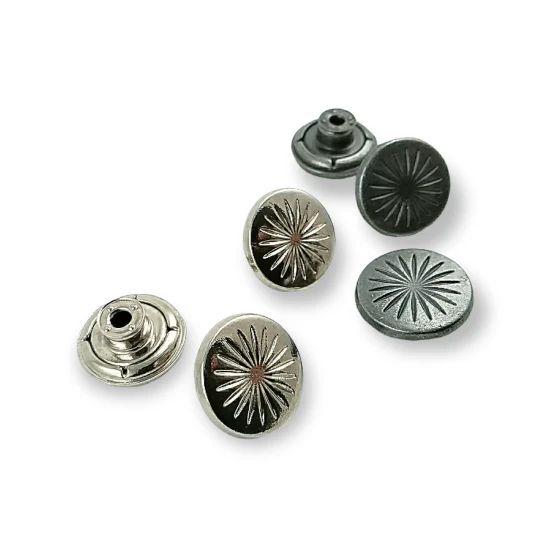
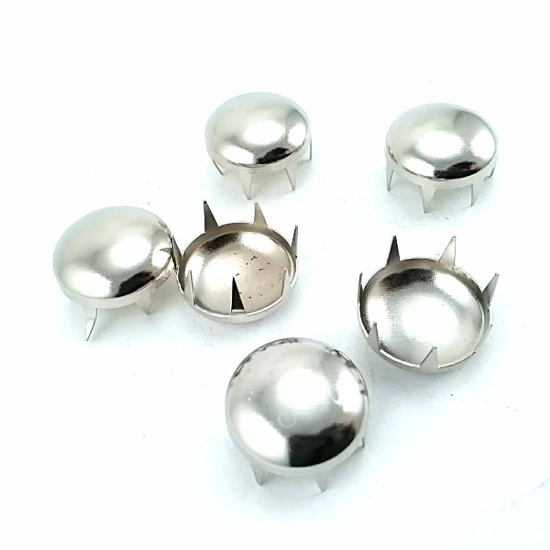
For folded leather strap ends, bag tabs and reinforced connection points, use compatible rivets for leather and bag hardware. For products that require installed eyelets, rivets or snap fasteners, check the relevant setting dies, fastening tools and application equipment before production.
Pin Buckle, Strap Adjuster and Side-Release Buckle: Which One Is Needed?
Choose a pin buckle or center bar buckle where the strap must close through prepared holes. Choose a strap adjuster where the webbing length needs to change without a pin-and-hole closure. Choose a side-release buckle where the product needs a quick opening and closing mechanism.
Pin buckles and center bar buckles are natural choices for belts, bag flaps, shoe straps, sandals, collars and decorative leather straps. Strap adjusters and side-release buckles are more suitable for backpacks, belt bags, leashes, outdoor equipment and functional webbing systems.
Common Selection Mistakes
- Choosing a buckle by external size instead of usable inner strap width
- Ignoring strap thickness and the available internal frame height
- Using a pin that does not match the prepared hole size
- Selecting a narrow shoe buckle for a wide belt or thick leather strap
- Using a buckle closure where a quick-release mechanism is actually needed
- Using only a strap adjuster where a perforated closure is required
- Mixing visibly different finishes on buckles, rings, hooks, chains and rivets
- Skipping rivet or eyelet planning on folded leather tabs and reinforced strap ends
Buying Checklist
- Measure the finished strap width before selecting the buckle.
- Check strap thickness against the buckle-frame height.
- Confirm that the pin can enter the planned strap holes correctly.
- Choose between pin buckle, center bar buckle, belt buckle, bag strap buckle or shoe buckle.
- Check the outside dimensions for the required visual scale.
- Consider whether the strap is leather, fabric, woven webbing, coated material or synthetic material.
- Match the finish with rings, hooks, rivets, chains and other visible metal hardware.
- Identify whether rivets, eyelets, snaps or installation tools are also required.
- Confirm package quantity before sampling, repair work or production.
Frequently Asked Questions
What is a pin buckle used for?
A pin buckle secures a perforated belt or strap by passing its pin through a prepared hole. It also allows the user to adjust the strap length in fixed steps.
What is a center bar buckle?
A center bar buckle has a central bar that guides the strap through the frame and positions the pin. It is commonly used in belts, bag straps, shoe straps, collars and leather accessories.
How do I choose the correct buckle size?
Start with the finished strap width. The buckle's usable inner width should match it closely. Then check strap thickness, frame height, pin size, hole placement and the overall buckle dimensions.
Can these buckles be used for bag straps?
Yes. Pin buckles and center bar buckles can be used on adjustable bag straps, decorative bag straps and bag-flap systems. For removable straps, add compatible rings and snap hooks.
Can I use a pin buckle with an eyelet?
Yes. An eyelet or grommet can reinforce a hole in leather, textile or another suitable strap material. The eyelet inner diameter, strap hole and buckle pin must be selected as a compatible system.
Do I need a snap fastener behind a visible bag buckle?
For frequently opened bag flaps, a hidden snap fastener or magnetic snap can support faster daily use while the visible buckle remains part of the external design.
Which products should I use with a belt or bag buckle?
Common companion components include D rings, O rings, strap adjusters, snap hooks, carabiner clips, locking rings, chains, rivets, eyelets and suitable installation tools where required.