Menu
Menu
Your Cart
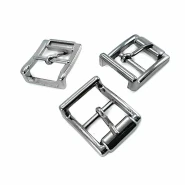
20 mm roller pin buckle for belt and bag straps AL4126
New
20 mm roller pin buckle for belt and bag straps AL4126

20 mm / 0.79 in Roller Pin Buckle for Belts and Straps AL4126

20 mm / 0.79 in roller pin buckle for belts, bag straps, leather tabs and adjustable accessory straps. The supplied manufacturer catalog lists the dimensions as 3.90 × 20 × 14 mm. Use the 20 mm value as the nominal strap class, then confirm the finished strap width, thickness, fold and pin-hole position with a physical sample.

  • Nominal strap class: 20 mm / 0.79 in
  • Construction: roller + pin adjustment
  • Catalog dimensions: 3.90 × 20 × 14 mm
  • Material: metal; alloy not verified
  • For belts, bag closures and accessory straps
  • Prototype testing recommended before production
Your information is protected with 256-bit SSL
0.11 USD
Ex Tax: 0.10 USD
  • Stock Quantity: In Stock
  • Product Code: AL4126

Available Options

This product has a minimum quantity of 100
Volume Pricing
Qty 1+ Each 1000+ 2500+
Price 0.11 USD 0.07 USD 0.06 USD
Save — 34.96% 44.95%

Product Reviews

No reviews yet. Be the first to write a review!

Q&A

Total Questions 0 Answered 0 Unanswered 0

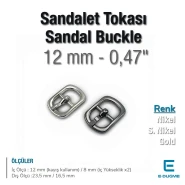
20 mm / 0.79 in roller pin buckle is a metal strap buckle designed for projects that need a familiar hole-and-pin adjustment system together with a roller at the strap turn. The supplied manufacturer catalog image identifies the item as code 4126 and shows the dimensions as 3.90 × 20 × 14 mm. Because the catalog does not label the axis represented by each number, those measurements are preserved exactly as printed instead of assigning an unsupported meaning such as thickness, height, or inside opening. The 20 mm value corresponds to the commercial 2 cm strap class. For real production, however, compatibility must be checked with the finished strap, including lining, folds, stitching, edge finishing, hole position, and the way the strap end is attached to the buckle.

What a Roller Pin Buckle Does

A roller pin buckle combines two familiar elements: a pin that locks into a prepared strap hole and a cylindrical roller positioned where the strap changes direction around the frame. The pin creates fixed adjustment points. The roller does not turn the buckle into a continuously adjustable slider; instead, it provides a moving contact surface along one edge of the frame. That distinction matters when deciding whether this hardware is suitable for a belt, bag closure strap, leather tab, accessory strap, or another adjustable construction.

The roller can help the strap travel around the buckle edge in a more controlled way, but it should not be described as eliminating wear or friction in every material. Leather, faux leather, woven webbing, coated textiles, and multi-layer straps all react differently. A thin flexible strap may move easily around the roller, while a thick folded strap may create bulk near the attachment point. For that reason, the buckle and the final strap build should always be tested together.

Understanding the 20 mm / 0.79 in Strap Class

The product is intended to be evaluated in the 20 mm strap category. In inches, 20 mm is approximately 0.79 in. This nominal size is useful when browsing hardware, but it is not a substitute for measuring the real finished strap. A strap cut to 20 mm before finishing can change after edge paint, folded edges, lamination, lining, reinforcement, or stitching. Even small changes can influence how cleanly the strap sits in the frame.

For product development, measure the strap at the exact area that will pass through or fold around the buckle. If the strap is double-layered at the attachment end, measure that doubled section separately. If the free end is thinner than the fixed end, both conditions matter. The correct choice is the combination that allows the strap to move as intended while keeping the pin aligned with the hole pattern.

Manufacturer Catalog Dimensions: 3.90 × 20 × 14 mm

The only verified dimensional set supplied for this buckle is 3.90 × 20 × 14 mm. The source image does not define whether the first number describes wire diameter, the second an inside width, or the third another opening. Rather than guess, this page keeps the sequence unchanged. This approach is important for technical purchasing because an invented axis label can create a false sense of precision and may lead to an incorrect production drawing.

If your project requires exact engineering dimensions, use a physical sample and measure the specific points relevant to your pattern. For example, a leather goods producer may care about the usable strap path and the space available for the folded attachment end, while a bag maker may also need to check how the buckle aligns visually with nearby rings, rivets, or loops. The catalog sequence is a useful starting reference, but the sample should be the final authority for tooling and pattern decisions.

Suitable Materials for Testing

This buckle can be considered for 20 mm-class leather, faux leather, textile straps, woven webbing, and other strap constructions that use a pin-hole closure. “Can be considered” is intentional language: the supplied information verifies the buckle type and nominal size, but not every possible strap material, thickness, or load condition. A material that is too thick may crowd the roller and restrict pin movement, while an overly thin or narrow strap may sit loosely in the frame.

Leather users should test both the body of the strap and the folded buckle end. Faux leather users should account for backing layers and reinforcement. Webbing users should consider how folded layers change the local thickness and whether the cut edge will be stitched, melted, folded, or covered. If several materials are used in one collection, each finished build should receive its own sample check rather than assuming one successful test applies to all variants.

Using the Buckle in Belt Construction

In a belt, the buckle works together with a series of adjustment holes. The fixed end of the belt is attached to the buckle, and the free end passes through the frame so the pin can enter the selected hole. The design looks simple, but several production details influence the finished result: strap width, thickness, the distance from the buckle to the first hole, hole spacing, folded-end length, stitch location, and the position of any keeper loop.

Before cutting a production batch, build one complete belt using the real buckle. Check that the pin enters the hole without excessive force, that the strap can bend around the roller, and that the folded fixed end does not interfere with the pin. Open and close the belt repeatedly. If the hole stretches immediately or the strap binds against the frame, adjust the pattern or material specification before scaling the design.

Using the Buckle on Bags and Small Leather Goods

Roller pin buckles can also be used on bag flap straps, decorative closure tabs, pouches, organizers, cases, and other small leather goods. In these applications the buckle may function primarily as a closure rather than as a body-worn belt adjustment. That changes how the designer should think about hole count, strap length, and expected opening frequency.

A short bag closure may need only one or two functional holes. A decorative strap may use the pin mainly as a visual locking detail. A longer adjustable strap may require more range, although a slider buckle may be more appropriate if continuous adjustment is the goal. The correct hardware depends on how the user interacts with the product. Choosing a pin buckle simply because it looks similar to another fitting can create an awkward user experience if the intended adjustment method is different.

Roller Pin Buckle vs. Slider Buckle

A pin buckle creates defined adjustment points through holes or slots. A slider buckle typically adjusts by routing the strap through bars and using friction or tension to hold the selected length. These systems should not be treated as interchangeable. A bag shoulder strap that must be changed frequently may benefit from a slider, while a classic belt or flap closure may suit a pin buckle better.

AL4126 belongs to the roller pin buckle family. Planning should therefore include the hole layout, pin access, and the geometry of the buckle end. If your pattern contains no holes and relies on continuous sliding adjustment, this is probably not the same functional category you need. Clarifying that distinction before purchasing can prevent wasted samples and pattern revisions.

Planning the Fixed Buckle End

The buckle itself is not a press-set component that attaches directly to fabric. One end of the strap must be secured around or through the appropriate area of the buckle. Depending on the product design, that fixed end may be folded and stitched, secured with a suitable rivet or screw, or attached using another method appropriate to the material. No specific fastener is verified as included with this item.

The fixed end deserves careful attention because the strap becomes thicker after folding. A clean fit on the single-layer free end does not prove that the double-layer fixed end will work equally well. If a rivet is used, the post length must match the finished material stack. If stitching is used, the stitch line should not make the fold so rigid that the buckle cannot articulate naturally. Test the complete construction, not just the loose buckle.

Pin Hole Design and Placement

The pin hole must be large enough for the pin to enter without unnecessary force but controlled enough to avoid excessive looseness at the chosen adjustment point. The correct hole size cannot be responsibly stated from the supplied catalog image because the exact pin geometry and a verified punching-die specification are not provided. A physical sample should therefore be used to determine the production hole.

Start with one test hole on the real strap. Close the buckle, apply the kind of hand tension expected in normal use, and reopen it several times. Inspect the hole edge. Leather fiber structure, faux leather backing, textile weave, and reinforcement all affect how a hole behaves. Once the test is satisfactory, establish the repeating hole spacing for the production pattern.

Why Finished Strap Thickness Matters

Width receives most of the attention when selecting a buckle, but thickness can be equally important. A 20 mm strap can be thin and flexible or thick and rigid. The thicker version may have difficulty bending around the roller or may crowd the fixed-end area. Edge paint, backing, reinforcement, folded leather, foam, or lining can all add to the final stack.

Measure the strap after the actual production processes are complete. If the product uses skiving, measure after skiving. If the buckle end is thinned specifically to make the fold cleaner, test that exact preparation. If multiple factories or material lots are involved, define an acceptable thickness range so quality control can detect changes before assembly problems appear.

Metal and Alloy Information

The supplied visual evidence supports describing the buckle as metal. It does not verify a specific alloy. For that reason, this product page does not claim that the buckle is zinc alloy, brass, steel, stainless steel, or any other named metal. That distinction is especially important when a project has requirements involving corrosion behavior, weight, plating compatibility, nickel content, magnetic response, or regulatory compliance.

If a specific alloy or compliance requirement is critical to your application, obtain technical confirmation before committing to production. A metallic appearance alone is not proof of composition. The same caution applies to surface finishes. Until actual color and plating options are verified for AL4126, the page should not promise gold, nickel, black nickel, antique brass, gunmetal, or another finish simply because similar products are offered in those colors.

Surface Finish and Color Matching

Hardware color can be a major design decision in bags, belts, footwear, and accessories. A buckle may need to coordinate with rings, snaps, rivets, zipper sliders, chain, or decorative trim. Even products sold under the same general finish name can vary in tone, gloss, and texture between production lots. If a collection depends on close color matching, physical samples are more reliable than screen images or color names alone.

When product photos and color options are later added to this listing, compare the actual option against your existing hardware set. For larger projects, keeping an approved hardware board or master sample can help purchasing and quality teams maintain consistency across reorders. Do not assume that one finish name guarantees an identical appearance across different suppliers or manufacturing periods.

Prototype Testing Before Production

A good prototype reproduces the real production build as closely as possible. Use the actual strap material, lining, reinforcement, stitching, edge treatment, fastener, and buckle. Avoid making a quick mock-up from a thinner substitute and treating that as a final compatibility test. The point of the prototype is to reveal the interactions that are difficult to predict from nominal dimensions alone.

Check how the strap enters the buckle, turns around the roller, aligns with the pin, and exits the frame. Confirm that the fixed end does not twist. Check the appearance from the front and side. Open and close the buckle repeatedly and inspect the hole for early deformation. If the design includes a keeper loop, verify that the free end reaches it naturally after fastening.

Quality Control Points for Incoming Hardware

For production use, incoming inspection can include the product code, overall form, roller movement, pin alignment, visible deformation, burrs, and surface appearance. These are general quality-control suggestions, not a claim that the manufacturer publishes a specific inspection standard for this model. Your acceptance criteria should be based on the needs of your finished product.

If a shipment contains multiple finishes or lots, keep them separated during inspection. Compare representative pieces with the approved sample. A roller that does not move freely, a visibly misaligned pin, or a distorted frame may affect assembly and should be evaluated before the hardware reaches the line. Recording the lot or delivery date can make later troubleshooting easier.

Assembly Checks on the Production Line

After the buckle is attached, inspect the fixed end for excessive bulk and confirm that the pin can move through its intended range. Fasten the strap into at least one working hole. The strap should sit in the frame without obvious twisting. If the design requires several adjustment holes, test the extreme positions as well as the center position because strap angles can change across the range.

For stitched constructions, check that the stitch line remains consistent and does not cut into the hardware. For riveted constructions, verify that the rivet is fully set without crushing the material excessively. For screw-based attachments, use the fastening practice specified by your product design. The buckle should be evaluated as part of the complete assembly rather than as an isolated component.

Common Sizing Mistakes

One common mistake is measuring only the raw strip before finishing. Another is assuming that “2 cm buckle” means every internal dimension of the frame is exactly 20 mm. A third is copying the hole pattern from a different buckle because the two products look similar in a photograph. A fourth is ignoring the thickness created by a folded fixed end.

Another frequent issue is selecting a pin buckle for a product that actually needs continuous adjustment. The result can be too many holes, an awkward free end, or a closure that does not match how the customer expects to use the item. These mistakes are usually cheaper to correct at the prototype stage than after cutting or sewing a full batch.

Pattern-Making Notes

When documenting the pattern, record more than the nominal 20 mm size. Note the buckle code, the catalog dimension sequence 3.90 × 20 × 14 mm, the finished strap width, the finished thickness at the buckle end, the fold length, the fastener location, the first usable hole position, and the hole spacing. This creates a reproducible specification for future orders.

If the buckle is changed later, repeat the fit test even if the replacement is also sold as a 20 mm model. Small differences in frame shape, pin length, roller placement, or clearance can require a pattern adjustment. Treating the buckle code as part of the pattern specification helps prevent unplanned substitutions from reaching production without review.

Care and Handling

Because no specific plating or chemical-resistance data has been verified for AL4126, avoid making assumptions about exposure to salt water, strong detergents, solvents, acids, alkaline cleaners, or repeated machine washing. The care instructions for the final product should be based on testing the complete combination of hardware, strap material, coating, and other components.

During production and storage, metal parts can mark one another if they are allowed to rub against hard surfaces in bulk. Appropriate separation and packaging can help preserve appearance. If the buckle is part of a premium visible area, define a cosmetic acceptance standard so handling marks are identified before final packing.

When to Request Additional Technical Confirmation

Additional confirmation is appropriate when the project depends on a specific alloy, plating system, restricted-substance requirement, wash resistance, outdoor exposure, load capacity, salt-spray performance, or another measurable specification. None of those values should be inferred from the product photo. The verified information currently available is the buckle type, product code, metal classification, nominal strap class, and the catalog measurement sequence.

This distinction helps professional buyers separate design suitability from engineering compliance. A buckle may look and fit correctly in a fashion accessory but still require further testing if the finished product has a regulated or safety-critical use. The general application examples on this page are not a certification statement.

Production Cost and the Importance of Correct Hardware Selection

The purchase price of a buckle is only one part of its impact on production cost. A wrong buckle can force a pattern revision, new punching setup, additional sampling, re-cut straps, rework, or delayed assembly. A five-minute fit check at the sample stage can therefore be more valuable than choosing hardware only on unit price.

For larger runs, approve one complete master sample and keep it as a reference. The master should show the exact strap, hole pattern, attachment method, and buckle. When later deliveries arrive, the team can compare them with the approved construction instead of relying on memory or a generic 20 mm label.

Practical Workshop Test Sequence

First, finish a short piece of the real strap exactly as it will be used in production. Second, pass it through the buckle and form the fixed buckle end using the intended stitch, rivet, screw, or other connection. Third, create one pin hole and test the closure. Fourth, open and close it several times while watching the hole edge, roller movement, and fold. Fifth, check the appearance from the front, back, and side.

If the result is satisfactory, use that sample to establish the hole pattern and assembly dimensions. If the strap binds, determine whether the cause is width, thickness, a bulky fold, fastener position, or an unsuitable hardware type. Changing only one variable at a time makes it easier to identify the cause of the problem.

Documentation for Designers and Buyers

A useful internal specification can include: product code AL4126, product type roller pin buckle, nominal strap class 20 mm / 0.79 in, catalog dimensions 3.90 × 20 × 14 mm, verified material description “metal, alloy unspecified,” approved finish, finished strap width, finished strap thickness, hole dimensions, hole spacing, fixed-end method, and the date of sample approval.

This level of documentation is particularly useful when several collections share similar-looking hardware. It prevents a purchasing team from substituting a different 20 mm buckle without realizing that the pattern was approved around a specific frame and roller geometry. It also makes repeat production easier after a long interval.

Frequently Asked Questions

Is this buckle for a 20 mm strap?

It is listed in the 20 mm / 0.79 in strap class. Confirm the finished strap width and thickness with a physical sample before production.

What are the verified dimensions?

The manufacturer catalog image shows 3.90 × 20 × 14 mm. The image does not label the axis represented by each number, so the sequence is preserved without inventing axis names.

Is it a roller buckle?

Yes. The buckle has a roller along the edge where the strap changes direction and also uses a pin for hole-based adjustment.

Can I use it on leather belts?

It can be evaluated for 20 mm-class leather belts. Test the finished thickness, folded buckle end, and hole geometry with the actual buckle.

Can it be used on bag closures?

Yes, it can be considered for suitable bag closure straps and leather tabs where a pin-hole fastening method fits the design.

Does it require a press?

The buckle is not a press-set component. The strap end is attached by the method selected for the project, such as stitching or an appropriate rivet or screw.

Are rivets or screws included?

No included fastening hardware has been verified, so rivets, screws, or other attachment parts should not be assumed to be included.

Is the buckle zinc alloy?

The specific alloy has not been verified. The product is described as metal without claiming zinc alloy, brass, steel, or another specific composition.

Which colors are available?

A verified finish list for AL4126 is not yet available. Color information should be confirmed when actual product images and options are added.

How do I know my strap will fit?

Measure the finished strap, build the folded buckle end, test one hole with the real buckle, and approve the complete sample before production.

Is a roller pin buckle the same as a slider buckle?

No. A pin buckle uses defined holes or slots; a slider generally provides continuous adjustment through strap routing and friction.

Can I use it in a safety-critical product?

No load rating, safety certification, or compliance data has been verified for this model. Safety-critical applications require separate engineering review and testing.

Final Selection Notes

AL4126 is best approached as a 20 mm-class roller pin buckle whose suitability is confirmed through a real sample, not through the nominal size alone. The manufacturer catalog provides a useful dimensional reference, but the finished strap construction determines whether the buckle works cleanly in the final product. Measure the complete build, verify pin-hole placement, and keep the approved sample as part of your production standard.

For professional product development, the most reliable sequence is simple: identify the correct hardware family, confirm the nominal size, measure the physical sample, build the actual strap assembly, test the closure repeatedly, and only then release the pattern for production. That process protects both design quality and manufacturing efficiency while avoiding unsupported technical assumptions.

Product Information
Belt Compatibility Nominal 20 mm / 0.79 in strap class. Confirm finished strap thickness, folded end and pin-hole position on a sample before production.
Buckle Structure Roller frame with pin adjustment mechanism
Product Type Roller pin buckle
SIZE / DIMENSION
Dimensions Manufacturer catalog dimensions: 3.90 × 20 × 14 mm. The 20 mm dimension corresponds to the 2 cm strap class.
Application
Mounting Method The strap end may be folded and sewn, secured with a suitable rivet/screw, or attached by another method appropriate to the project. Fastening hardware is not included.
MATERIAL
Material Metal; alloy type is not specified in the supplied manufacturer catalog image.
Usage Area
Most Frequently Used Area Belts, bag straps, leather and faux-leather straps, webbing, accessory straps and similar adjustable fastening applications.
Corporate Solutions

Custom Branded Production Solutions

E-Buttons produces custom accessories tailored to the needs of companies and brands. Size, shape, color and finish details can be planned individually based on a physical sample, a technical drawing, or your specific requirements.

Products prepared with your brand's own logo, text, color and surface finishes offer solutions that meet both your aesthetic and functional needs.

Our Product Groups

✓

Zippers

We produce zipper accessories custom to your brand, with logo pulls, custom shapes and a range of plating options.

✓

Snap Buttons

We produce logo-branded, custom snap buttons in both press-on and sew-on options.
Branded Snap Button
Branded Circle Snap Button
Branded Snap Fasteners
✓

Buttons

For both shank and sew-through button groups, production is available with your brand's logo, pattern and surface finish.

✓

Jeans Buttons

We offer logo-branded jeans buttons custom to your brand, made from zamak and brass.
Branded Jeans Button
Branded Jeans Buttons With Logo
Branded Jeans Button Only Logo
✓

Rivets

We produce branded, logo-marked rivets in a range of plating options, custom to your company.

✓

Eyelets and Grommets

Custom eyelets and grommets can be produced for your brand in a range of sizes, colors and surface finishes.
Branded Eyelets
Branded and Dyed Eyelets
✓

Buckles

We offer buckle production in custom sizes and designs for your brand, for bra straps, belts and other applications.

✓

Cord, Woven Belting and Lace

Within our textile accessory groups, we provide custom production solutions that match your brand's design language.

✓

Labels, Ribbons and Appliqués

For apparel, jewelry and accessory groups, we produce custom labels, ribbons and appliqués with your logo and text.

Production Process

Before production begins, electronic mockups and sample work can be provided, depending on your request, to help with the approval process. Production and delivery times are planned according to the product group and the finish details involved.

Average Timeframe: Production and delivery of accessories generally takes between 20 and 30 days from the date of payment.

Sample Drawing

Sample drawings showing product materials, dimensions and finish details can be prepared upon request.
Project
Contact us for custom accessory solutions featuring your brand's logo, sizing and design.
Before You Order

Dear Customer,

To help your ordering process go smoothly and transparently, we'd like to share a few important details with you.

Non-Standard Colors and Finishes

The prices listed for our products apply to the standard color options offered. Colors outside the standard range, enamel work, stone details or similar custom work are charged in addition to the product price.

Any price difference is determined by the material and workmanship required for the chosen finish.

Sales Unit

All prices shown apply based on the sales unit specified on the product page. This unit may vary by product — pack, gross, meter or piece.

Retail Orders

For retail orders, packaged products are shipped in the color indicated on the pack. For products where a minimum order quantity is specified on the product page, the color you selected is only shipped when the order meets that minimum quantity. For color requests below the stated minimum, we ship from whichever colors are currently in stock.

If your order needs clarification on color or quantity, our team will reach out to you quickly by phone or another communication channel.

Custom Colors and Bulk Orders

✓
5,000 Units and Above

Production can be planned with the custom color finish you request; products are typically ready to ship within 3–4 business days. This timeframe may vary depending on the product type and the processes involved.

✓
20,000 Units and Above

For orders at this volume and above, we're glad to offer your company a custom price quote.

For colors outside the standard range, or for special plating, enamel, stone and rhinestone products, please check the Special Plating Colors tab or contact us directly.

Looking for custom branded production? For bulk orders, we offer tailored solutions for custom logo production and designs matching your brand. Contact us for more details on branded production options.
i
Important Note

Product images may show slight tonal differences from the actual product due to lighting, screen settings and photography conditions.

Domestic Delivery (Turkey)

Domestic Delivery

We prepare your orders with care and deliver them to your address through reliable courier partners. During checkout you can see the estimated delivery time and shipping cost.

✓
Same-Day Dispatch

Eligible orders placed before 3:00 PM are handed over to the courier the same day.

✓
Reliable Carriers

Shipments are carried out via HepsiJet and Yurtiçi Kargo.

✓
15-Day Return Window

Eligible products can be returned within 15 days of delivery.

Shipping Options

HepsiJet and Yurtiçi Kargo options suited to your delivery address are shown automatically at checkout.

Shipping Costs

Shipping cost is calculated based on the delivery address, package weight and the carrier selected. You can see the exact amount before completing your order.

Easy Returns

Provided it meets the return conditions, you can return a purchased item within 15 days of the day you received it.

Return shipping costs are the customer's responsibility.
Need help with your order? For more details on delivery and returns, check our Frequently Asked Questions page or contact Customer Service.
Worldwide Shipping

International Delivery

We ship E-Buttons products to individual and business customers around the world through international carrier options.

✓
Multiple Currencies

Prices can be displayed in TRY, USD and EUR.

✓
International Carriers

Shipments are handled via AFS Kargo, DHL and FedEx.

✓
Shipment Tracking

You'll receive a tracking number as soon as your order is handed over to the carrier.

Secure Payment

Credit card payment is accepted for international orders. Shipping cannot begin until payment is received and an order invoice has been issued.

Shipping Costs

Shipping cost is calculated based on the destination country, the selected carrier, package weight and package dimensions.

The total shipping cost is shown at checkout before you confirm your order.

Carriers

International shipments are carried out via AFS Kargo, DHL and FedEx. Options suited to your address and order will be shown at checkout.

For business or high-volume orders, contact Customer Service to discuss alternative shipping options.

Customs and Taxes

Customs duties, import taxes, handling fees or other charges may apply in the destination country.

Because these charges vary by country, they cannot be calculated in advance by our system.

!
Important information about customs charges

Any customs duties, import taxes, storage fees, handling charges or other costs that arise in the destination country are the customer's responsibility.

We do not accept returns, cancellations or refunds resulting from customs duties, import costs, or the recipient's failure to complete customs clearance.

Before You Order

  • Make sure you select the shipping method appropriate for your delivery region.
  • The exact shipping cost is shown before payment is completed.
  • Weight, package size and product restrictions may vary by country.
  • If further information is needed, we will contact you at your registered email address.
  • Once an order has been handed over to the carrier, delays caused by the carrier or customs are beyond E-Buttons.com's direct control.
Track your shipment with ease. Once your package is handed to the carrier, the tracking number is sent by email. In the event of loss or damage, the carrier's claims and insurance procedure applies.