What Is Continuous Zipper Chain?
Continuous zipper chain is zipper tape supplied in a continuous length rather than in a fixed ready-made size. It is also known as zipper tape, zipper chain by the metre, zipper by the meter, continuous zip or metre zipper.
Unlike ready-made zippers, continuous zipper chain does not arrive with a pre-determined finished length, lower stop, separating box or completed end construction. The chain is cut according to the actual project requirement, then completed with compatible sliders, stops or other finishing components depending on the intended application.
This makes continuous zipper chain especially useful where one workshop produces several different zipper lengths, where the closure line is unusually long, or where the same project includes straight, curved or wraparound closures. Tarpaulin workshops, tent manufacturers, awning makers, bag producers, upholstery workshops and technical textile businesses often use continuous zipper chain because it can be adapted to the product rather than forcing the product to fit a standard zipper length.
For ready-made zipper options with fixed lengths and completed end constructions, browse Zippers. For continuous products supplied for cutting and project-based installation, browse Continuous Zipper Chain.
Continuous Zipper Chain vs. Ready-Made Zippers
| Feature |
Continuous Zipper Chain |
Ready-Made Zipper |
| Supply Format |
Supplied as a continuous zipper chain in metre-based lengths or product-specific rolls. |
Supplied in a finished fixed length. |
| Length Selection |
Cut according to the actual closure line of the project. |
Selected from available finished zipper lengths. |
| Slider Selection |
Compatible sliders must be selected according to zipper type and intended use. |
Usually supplied with a built-in slider configuration. |
| End Construction |
Stops, end finishing and separating systems are planned according to the project. |
Closed-end, open-end or combi construction is prepared in advance. |
| Best Use |
Tarpaulins, tents, awnings, bags, covers, technical textiles and custom-length production. |
Jackets, trousers, dresses, pockets, ready-made bags and standard garment applications. |
Where Is Continuous Zipper Chain Used?
The right application depends on the zipper construction, tooth type, tape structure, slider system and expected load. Continuous zipper chain can be used in many textile, outdoor and industrial-style applications when the correct zipper type is selected.
- Tarpaulins and covers: Vehicle tarpaulins, protective covers, industrial covers, storage covers and flexible textile enclosures.
- Tents and camping products: Tent entrances, camping covers, textile shelters, sleeping equipment covers and outdoor storage products.
- Awnings and shade systems: Awning panels, side covers, shade textiles, windbreaks and modular outdoor covers.
- Bags and cases: Equipment bags, sports bags, tool bags, organiser bags, carrying cases and custom textile covers.
- Outdoor products: Camping gear, technical textile products, outdoor storage, protective equipment and weather-exposed accessories.
- Workshop and repair applications: Replacing damaged zipper sections, producing custom zipper lengths and repairing tents, tarpaulins, bag covers or outdoor textiles.
- Special production: Curved, long, wraparound or non-standard closure lines where ready-made zippers are not suitable.
Continuous Zipper Chain Types
Continuous zipper chain should be selected according to tooth construction, zipper type, coating requirement, closure shape and the product’s expected exposure to load, movement, moisture and weather. The category includes nylon coil, molded plastic, PU-coated and TPU-coated options for different projects.
TPU-Coated Type 10 Nylon Coil Zipper Chain
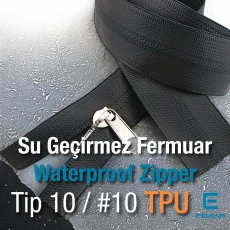
TPU-Coated Type 10 Nylon Coil Zipper Chain is designed for projects that need a flexible zipper structure with added resistance to direct water entry along the closure line. It can be used in outdoor bags, technical covers, tarpaulins, tents, outerwear and weather-exposed textile products when the zipper system is suitable for the final construction.
TPU coating can provide a thinner and more flexible surface than some conventional coated zipper systems. However, the zipper chain alone does not make the complete product waterproof. Overall water performance depends on the main fabric, seams, needle holes, seam sealing, zipper-end finishing, closure direction and full product construction.
PU-Coated Type 10 Nylon Coil Zipper Chain
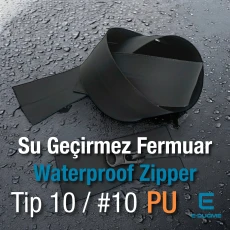
PU-Coated Type 10 Nylon Coil Zipper Chain is a continuous coated zipper option for outerwear, bags, tarpaulins, tents and outdoor textile products. It can be considered when the zipper line needs a protected surface and the project requires custom cutting by the metre.
Before choosing a PU-coated zipper chain, check the required length, slider compatibility, tape colour, textile thickness and whether the zipper will run through a straight, curved or wraparound closure line. A compatible slider is essential for smooth zipper movement and reliable tooth engagement.
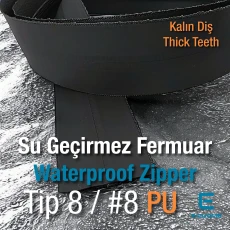
PU-Coated Type 8 Zipper Chain
PU-coated Type 8 zipper chain can be used in bags, technical covers, outdoor products and projects that require a more substantial zipper profile than lightweight zipper tape. It should be selected according to the real project requirements rather than tooth size alone.
A thicker zipper chain may create a more visible closure line and can suit structured products. On lightweight, soft or sharply curved materials, however, a large zipper profile may create stiffness or affect the appearance of the sewing line. Always test the selected chain on the actual fabric before production.
Type 20 / #10 Nylon Coil Zipper Chain for Tarpaulins and Tents
Type 20 / #10 Nylon Coil Zipper Chain is intended for tarpaulins, tents, awnings, fabric covers, camping gear and flexible outdoor textile applications. Its nylon coil construction can provide a softer and more flexible zipper line than a rigid molded-tooth structure.
This type of zipper chain is useful for products that fold, bend, roll or compress during use. For example, tent doors, fabric covers, tarpaulin systems and flexible outdoor enclosures may benefit from a nylon coil zipper chain when the compatible slider and the tape structure are selected correctly.
For double-sided access or installations where both sides of the closure need to be operated, a compatible Type 20 Nylon Coil Double Pull Slider can be selected according to the final zipper system.
Type 9 Molded Plastic Zipper Chain for Tarpaulins and Tents
Type 9 Molded Plastic Zipper Chain is suitable for tarpaulins, tents, awnings, vehicle covers, heavy textile structures and projects where a more visible, structured plastic tooth profile is required.
Molded plastic zipper chain can be preferred when the closure should have more defined teeth and a stronger visual structure. It may suit larger covers, more structured bag applications, industrial-style textile products and projects where the zipper is expected to remain visible as part of the design.
Custom production may allow zipper tape and tooth colour planning for suitable orders. Before starting custom production, confirm the sample, colour direction, intended use, required quantity, zipper type, slider system and expected production conditions.
Nylon Coil Zipper Chain vs. Molded Plastic Zipper Chain
Nylon coil and molded plastic zipper chains solve different production needs. The correct choice depends on flexibility, visual appearance, fabric weight, closure shape, expected use and slider compatibility.
| Zipper Chain Type |
General Characteristics |
Possible Applications |
| Nylon Coil Zipper Chain |
Flexible, lighter and better suited to bending or folding closure lines. |
Tents, tarpaulins, bags, covers, outdoor textiles, flexible cases and foldable textile products. |
| Molded Plastic Zipper Chain |
More visible, structured and defined tooth profile. |
Awnings, tarpaulins, structured covers, bags, equipment products and projects requiring a stronger visual zipper line. |
| PU- or TPU-Coated Nylon Coil Chain |
Flexible zipper chain with a coated surface intended to help reduce direct water entry along the zipper line. |
Outdoor bags, technical covers, rain-exposed textile products, tents, tarpaulins and weather-sensitive applications. |
How to Choose the Correct Slider for Continuous Zipper Chain
The slider is one of the most important parts of a continuous zipper system. A zipper chain will not perform correctly if the slider does not match the zipper type, tooth construction, chain size and intended opening direction.
Do not use a slider simply because it looks similar. The internal channel, tooth engagement and slider structure must be compatible with the exact zipper system. An incompatible slider may cause resistance, tooth separation, uneven closure, poor alignment or premature wear.
- Match the slider with the zipper type and tooth structure.
- Check whether the project requires a single slider, double pull slider or two-way arrangement.
- Confirm the correct orientation before inserting the slider onto the chain.
- For coated zipper chain, use a slider suitable for the coated zipper construction.
- Consider whether the closure will be operated from one side or both sides.
- Test the zipper chain and slider together on a sample before cutting the full production quantity.
How to Calculate How Much Zipper Chain You Need
Measure the real closure line rather than estimating from the overall size of the product. A tent door, tarpaulin opening, awning panel, bag lid or curved cover may require a different amount of zipper chain even when the finished products appear similar in size.
- Measure the actual zipper sewing line on the product or pattern.
- Measure curved and wraparound closure lines along the real sewing path.
- Calculate each separate zipper line individually for products with more than one opening.
- Add allowance for sample production, cutting, end finishing and possible production waste.
- Plan separately for sliders, stops and any finishing components required by the project.
- For repeated production, calculate the total chain requirement per model before placing the order.
How to Choose Water-Repellent Zipper Chain
PU- and TPU-coated continuous zipper chains are selected when the zipper line may be exposed to rain, moisture, splash or outdoor conditions. Their coated surface can help reduce direct water entry along the zipper line.
However, water-repellent zipper chain is only one part of a weather-protection design. The finished product may still allow water through seams, stitch holes, unsealed fabric edges, zipper ends or other construction areas.
| Selection Point |
Why It Matters |
| Coating Type |
PU and TPU coatings support reduced direct water entry along the zipper line, with different surface and flexibility characteristics. |
| Slider Compatibility |
The slider must be compatible with the coated zipper chain to support smooth movement and correct tooth engagement. |
| Fabric Construction |
The shell fabric must be suitable for the required water-protection target; zipper tape alone cannot protect an unsuitable fabric. |
| Seam Construction |
Needle holes, seam direction and seam finishing affect the final product’s water performance. |
| Closure Shape |
Sharp curves, wraparound closure lines and frequent bending can affect zipper performance and should be tested before production. |
| End Finishing |
Zipper starts and ends can become water-entry points if they are not planned correctly in the final product construction. |
How to Install Continuous Zipper Chain
Continuous zipper chain should be tested and prepared before final sewing. This is especially important for long tarpaulin runs, curved closures, coated zipper tapes and applications that use double pull sliders.
- Mark the zipper line on the real pattern or product before cutting the chain.
- Cut the zipper chain with enough allowance for finishing and testing.
- Insert the compatible slider and confirm smooth opening and closing before sewing.
- Keep both zipper tapes aligned during installation to avoid uneven closure.
- Do not stretch the zipper tape excessively during sewing.
- Test coated zipper chain on the actual fabric before using it in a full production run.
- Plan suitable stops, sewn ends or other finishing methods according to the product’s intended use.
Common Mistakes When Choosing Continuous Zipper Chain
- Choosing zipper chain only by colour without checking the zipper type, tooth structure and slider compatibility.
- Using an incompatible slider with the zipper chain.
- Treating continuous zipper chain like a ready-made zipper without planning the end construction.
- Choosing a zipper type without considering fabric thickness, closure shape and expected use.
- Assuming coated zipper chain makes the complete product fully waterproof.
- Using a large structured tooth profile on lightweight or highly flexible fabric without testing the result.
- Ignoring the need for extra length for cutting, sample work and end finishing.
- Starting production without testing zipper chain, slider, fabric and sewing construction together.
Related Categories and Products
- Zippers – Browse ready-made and project-based zipper systems by application and construction.
- Continuous Zipper Chain – Explore zipper chain by the metre for tarpaulins, tents, awnings, bags and technical textile projects.
- Type 20 / #10 Nylon Coil Zipper Chain for Tarpaulins and Tents – For flexible tent, tarp, awning, cover and outdoor textile applications.
- Type 20 Nylon Coil Double Pull Slider – For compatible tarpaulin, tent and dual-sided zipper chain systems.
- TPU-Coated Type 10 Nylon Coil Zipper Chain – For outdoor bags, technical covers, tarpaulins and weather-exposed textile projects.
- PU-Coated Type 10 Nylon Coil Zipper Chain – For technical textile, tent, bag, cover and outdoor applications.
- Type 9 Molded Plastic Tarpaulin Zipper Chain – Custom Production – For structured tarpaulin, tent, awning, cover and special-colour zipper projects.
Frequently Asked Questions
What is continuous zipper chain?
Continuous zipper chain is zipper tape supplied in a continuous length rather than a fixed ready-made size. It can be cut according to the project and completed with compatible sliders, stops and finishing components.
What is the difference between zipper chain and a ready-made zipper?
Zipper chain is supplied for custom cutting and project-based finishing. A ready-made zipper is supplied in a fixed length with its end construction already prepared.
Are sliders included with continuous zipper chain?
Slider inclusion depends on the individual product or set. Check the product content before ordering. When sliders are not included, select a slider that is fully compatible with the zipper type and tooth construction.
Which zipper chain should I use for tarpaulins and tents?
The correct choice depends on fabric weight, closure length, expected use, required flexibility, weather exposure and slider setup. Type 20 / #10 nylon coil chain can suit flexible textile covers, while Type 9 molded plastic chain can suit projects that need more visible structured teeth.
Can continuous zipper chain be used for awnings?
Yes. Continuous zipper chain can be used for awnings, side covers and shade systems when the zipper type, tape construction, slider system and expected load are suitable for the final product.
What is the benefit of TPU- or PU-coated zipper chain?
Coated zipper chain can help reduce direct water entry along the zipper line. It can be useful for outdoor bags, technical covers, tents, tarpaulins and products exposed to moisture or weather conditions.
Does coated zipper chain make the product waterproof?
No. Coated zipper chain helps reduce water entry along the zipper line, but full water performance depends on the fabric, seams, needle holes, seam sealing, zipper ends and complete product construction.
How many metres of zipper chain should I order?
Measure the actual zipper line, then add allowance for samples, cutting, end finishing and possible production waste. For curved or wraparound openings, measure along the true sewing path rather than in a straight line.
Can continuous zipper chain be used for bag making?
Yes. It can be used for bags, pouches, organisers, equipment covers and carrying cases when the zipper type, slider, tooth construction and expected load are suitable for the project.

.jpg-40x40.webp "Magnetic Snaps Buttons")

.jpg-40x40.webp "Prong Snap Fasteners for Baby Clothes")


.jpg-40x40.webp "Curved Snaps Buttons")


.jpg-40x40.webp "Snap Fasteners Half Dome type")
-no5-k0010%20(3).jpg-40x40.webp "Eyetlets")


-K0014.png-40x40.webp "Steel Eyelets and Iron Metal Grommets")

.jpg-40x40.webp "Flat Brass Eyelets and Grommets")

.jpg-40x40.webp "Aluminum Eyelets and Grommets")


.jpg-40x40.webp "Galvanized Eyelets and Grommets")


.jpg-40x40.webp "Hole Cutter Tools and Punching Dies")

.jpg-40x40.webp "Grommet Punching Dies")


.jpg-40x40.webp "Pearls Types")


.jpg-40x40.webp "Rivets")


.jpg-40x40.webp "Water-Repellent Jacket Zippers")


.jpg-40x40.webp "Tires")

.jpg-40x40.webp "Round Braided Elastic Cord")


.png-40x40.webp "Enameled Buttons")


.png-40x40.webp "Two Hole Sewing Buttons")


.jpg-40x40.webp "Carabiner Clips, Snap Hooks and Bag Hooks")


-PhotoRoom.png-40x40.webp "Spring Rings, Key Rings and Snap Clamps")


.png-40x40.webp "Hook and Eye Closures Sew-On")


.png-40x40.webp "Bag Making Kits")

.png-40x40.webp "Continuous Zipper Sets")


.jpg-40x40.webp "Bra Underwires")




-no5-k0010%20(3).jpg-590x590.webp "Eyelets and Grommets")
.jpg-590x590.webp "Rivets")
.png-100x100.webp "N5 / #5 Nylon Coil Zipper Chain by the Meter for Bags, Tents and Tarpaulins ESRTNYLT10")
.png-230x230.webp "N5 / #5 Nylon Coil Zipper Chain by the Meter for Bags, Tents and Tarpaulins ESRTNYLT10")
.png-230x230.webp "Nylon #3 Ribbon Zipper - ESRTNYLT5")
.jpg-230x230.webp "Tarpaulin Zipper #20 Nylon Coil Tent Zipper ZPS00SERITT20")
.jpg-230x230.webp "Tarpaulin Zipper #9 Chuncky Zipper Tent Zipper Special Production ZPK009SERITT9")
.jpg-230x230.webp "Canvas Zipper #9 Molded Zipper - Tent Zipper SB009SERITT9")