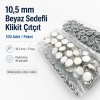
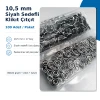
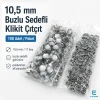
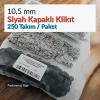
Baby prong snap fasteners and Klikıt press studs
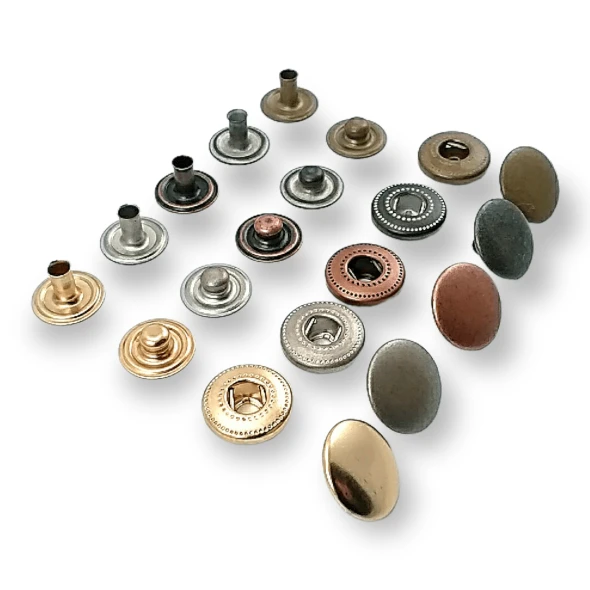
Explore E-Düğme baby prong press studs for bodysuits, rompers and lightweight textile work. Choose the upper face, size and metal type to suit the finished garment. These products are set with compatible dies. Small baby snaps, pearl-effect designs and large prong models are separate groups and should be compared by their actual construction. The selection guide below helps you check size, colour, fitting method and selling pack before ordering.
Prong snap size guide: millimetres and inches
| Diameter | Approx. inches | Typical application | Available design family |
|---|
| 8 mm | 0.315 in | Babywear, narrow openings | Open-ring, coloured |
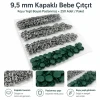
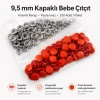
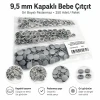
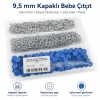
| 9.5 mm | 0.374 in | Bodysuits, light blouses | Open-ring, capped, pearl-effect |
| 10.5 mm | 0.413 in | Rompers, shirts, light textiles | Open-ring, capped |
| 12.5 mm | 0.492 in | Larger garment openings | Ring and mixed-face prong |
| 15 mm | 0.591 in | Jackets, accessories | Ring and mixed-face prong |
| 17 mm | 0.669 in | Jackets, bags | Large / long-prong / ring-cap |
| 18 mm | 0.709 in | Large decorative closure | Capped prong |
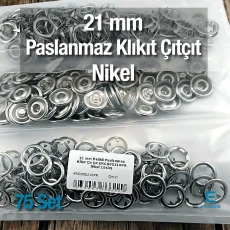
| 21 mm | 0.827 in | Bags, heavier textiles | Open-ring and cap-ring |
Compare baby snap pack quantities
| Family or product example | Size | Pack example |
|---|
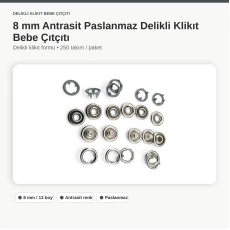
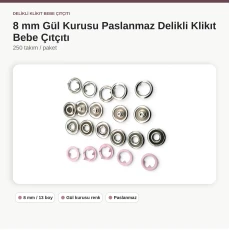
| Open-ring coloured Klikıt | 8 / 9.5 mm | 250 pieces on selected variants |
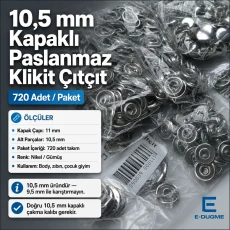
| Classic small metal Klikıt | 9.5 / 10.5 mm | 720 pieces on selected variants |
| Capped coloured or brass Klikıt | 9.5 / 10.5 mm | 144 or 250 pieces on selected variants |
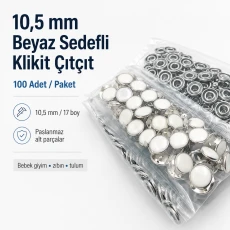
| Pearl-effect | 9.5 / 10.5 mm | 100 pieces on selected variants |
| Large prong models | 12.5 / 15 / 21 mm | 75 pieces on selected variants |
| 8 mm bulk models | 8 mm | 1,000 pieces |
Start with the garment, not the diameter
A prong snap should be selected for the garment it will close. On a baby bodysuit, the fastening may sit close to a narrow edge of fine knit fabric. On a shirt, the overlap can be broader and supported by a facing. On a jacket or bag, the fabric may have a lining or added reinforcement. Those differences affect where the snap is installed and which size is practical. Begin by checking the position, number of fabric layers and required appearance. Then compare the metal, surface finish, type of upper component and pack quantity. This gives a clearer route to a suitable product than choosing solely by the colour of a photo.
What makes a prong snap different
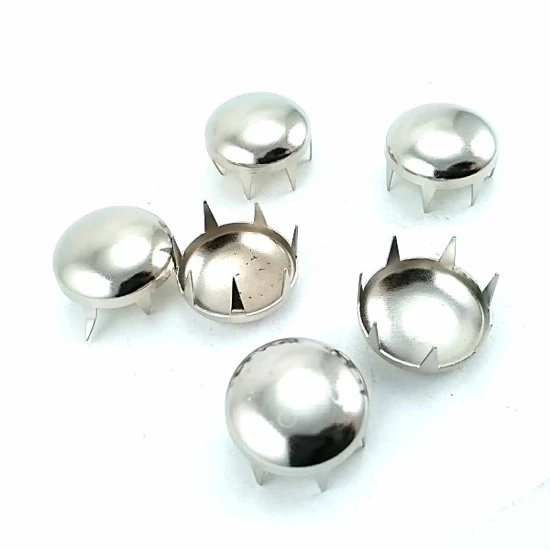
Prong snap fasteners use small prongs to grip the fabric during installation. They are fitted with the correct setting die, rather than being sewn in place with a needle and thread. The assembly includes mating parts for the two sides of the opening, which must belong to a matching system. A prong snap is also different from a cap-and-post snap where the installation structure may be completely different. When buying for an existing garment, compare the original fastening mechanism as well as its outside diameter. For a new garment, order matched components and make a test installation before deciding the size for a complete production run.
Open-ring baby snaps
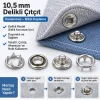
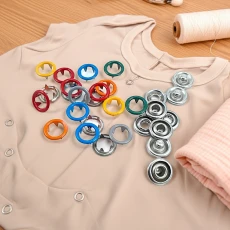
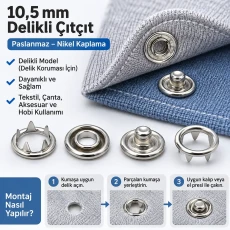
An open-ring snap leaves a small opening at the centre of the visible upper part. The fabric can be seen through this opening, so the appearance of the finished item is influenced by both the metal finish and the colour underneath. This is a useful style for garments that need an understated fastening. The 8 mm and 9.5 mm families include open-ring options, while certain 10.5 mm products also use the open-ring construction. The upper ring and the mating components need to be kept together as the correct set. The words open ring describe the appearance; they do not tell you which die, metal or pack size is supplied.
Capped baby snaps
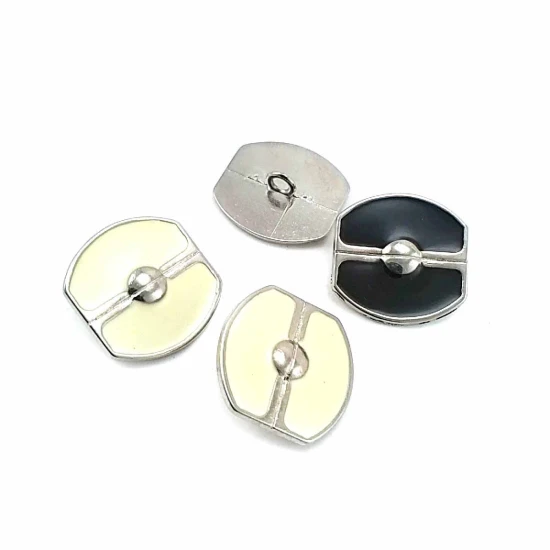
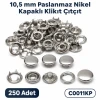
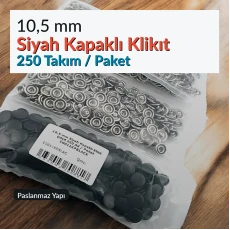
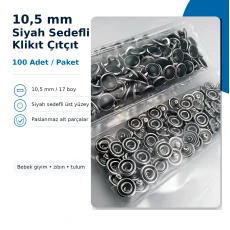
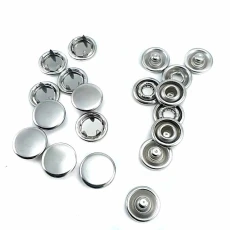
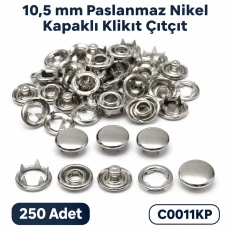
A capped Klikıt snap gives the top of the fastening a closed metal face. Customers often choose this style when the snap is a small visible detail on a bodysuit, blouse or lightweight garment. The 9.5 mm and 10.5 mm groups include capped stainless steel designs as well as coloured or coated variants. A smooth cap can be more prominent than an open-ring style of the same nominal diameter. Compare cap shape, colour and the overall look against a real fabric sample. When choosing a replacement, do not mix a capped top from one model with fittings from another unless compatibility is specifically established.
Pearlescent designs
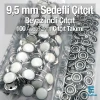
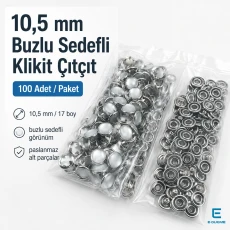
Pearl-effect Klikıt snaps are intended for customers who want a softer decorative appearance. In the inspected range, 9.5 mm pearlescent items are available in finishes such as frosted, white and black, and certain 10.5 mm pearlescent products are also listed. This finish gives the outer face a different look from a plain metal or painted cap. It should be selected by its specific product code and pack size, because pearl-effect models are not all supplied in the same selling quantity as standard stainless snaps. Check the photo and exact shade before ordering for a garment that has to match existing buttons or other hardware.
8 mm snaps for fine openings
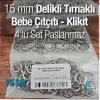
The 8 mm Klikıt family is the smallest principal size group in the category and is useful where the closure should occupy little surface area. Several coloured open-ring models are sold in 250-piece packs, and separate metal options appear in 1,000-piece packs. Light garments and small textile accessories are natural places to assess this size. The snap must nevertheless be installed into a fabric structure that can retain the prongs securely. On fine jersey or thin woven cloth, check the sample for distortion when the two halves are pulled apart. Choose the colour and pack for the actual product, rather than assuming every 8 mm variant has the same quantity.
9.5 mm open-ring models
The 9.5 mm or approximately 3/8 inch family includes open-ring snaps with several colour choices. Stainless steel packs appear in quantities such as 250 and 720, while specific coloured lines can have a different pack size. This diameter often fits on bodysuits, children’s garments and light blouses where a compact fastening is wanted. A coloured ring allows the garment fabric to show at the middle of the closure. Check whether a product uses a stainless metal body or another metal and read the pack quantity in its own listing. The cap appearance alone is not a reliable guide to the composition of the mating parts.
9.5 mm capped and pearl-effect models
At 9.5 mm there are also solid capped and pearl-effect choices. Standard stainless capped products, painted caps and decorative pearlescent designs can have different pack quantities. For instance, the product list includes 720-piece stainless packs, several 250-piece coloured packs and 100-piece pearl-effect items. That makes the type of upper face an important buying filter. If the fastening will be visible on a pale baby garment, compare the metal finish or pearl shade directly with the fabric. A design that suits a plain cotton bodysuit may look different against patterned knitwear. Test the assembly before committing to a complete collection.
10.5 mm prong snap sizes
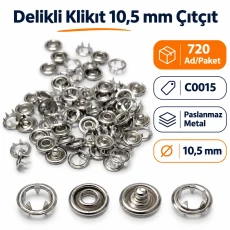
The 10.5 mm range offers both capped and open-ring Klikıt snaps. Product records include 144-piece coloured or brass capped versions, 250-piece stainless options and a 720-piece capped stainless pack. In use, the extra diameter compared with 9.5 mm can be helpful when a slightly larger visible fastening is wanted. It does not automatically make the snap suitable for thicker fabric, because the prong geometry and installation depend on the model. Compare the product code, metal and die information. When replacing an existing snap, measure the actual fitting and check whether it is a ring or cap version.
Stainless steel choices
Stainless steel is offered across several of the small Klikıt snap families. The range includes open-ring, capped, coloured and some pearl-effect options, but availability varies by model and size. A stainless description applies to the specified components in that product listing; it should not be extended to every finish or accessory in the category. The metal is one part of the selection. Stitching, fabric construction and garment care conditions also matter to the completed article. For regularly laundered clothing, choose a fastening that suits the intended care regime and test the assembled garment under the care process planned for that product.
Brass choices
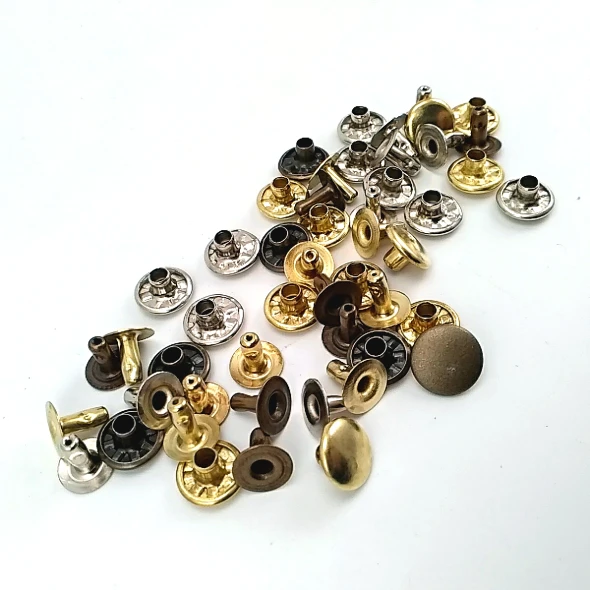
Brass Klikıt and larger prong snaps are listed alongside the stainless steel ranges. Some 10.5 mm brass capped products are packed in 144-piece quantities, while larger 12.5, 15, 17 and 21 mm models use their own designs and packages. Brass is not a guarantee that two fittings will work together. The prong arrangement, socket shape, visible upper part and product code should all match the intended closure. When a specific metal colour is needed, review the finish options for that individual product. Nickel, Black Nikel and other finishes may be offered on selected items, but not necessarily across every size or family.
Colours for small garments
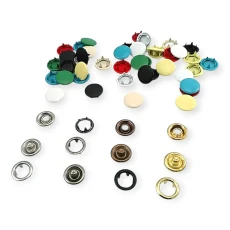
Small snaps can be made less conspicuous by choosing a finish that blends with the textile. The category includes shades such as optical white, ecru, soft green, baby blue, powder pink and darker accents in selected product groups. White, off-white, bone and ecru are separate choices, and a colour shown on a screen can differ from the actual metal finish. Before purchasing large quantities, compare a sample against the real fabric in normal lighting. For repeat orders, keep the product code and exact colour name. A finish that appears on an 8 mm ring is not automatically available on a 10.5 mm capped snap.
8-colour selection sets
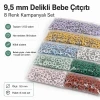
A 9.5 mm open-ring colour selection set is listed for customers who need to compare several finishes in one order. Its product description specifies eight colours, with 144 sets of each, giving 1,152 complete sets in total. This is a distinct item from single-colour 250-piece packs or the larger single-model packages. A mixed assortment can be useful when making samples for children’s clothing or when a workshop handles repairs across different garment colours. Check the set listing for the precise assortment and keep the chosen single-colour model code for later reorders. Do not treat the number of colours as the number of sets supplied.
The larger prong snap family
Not every snap in this category is intended for a baby bodysuit. The range also includes larger prong models around 12.5, 15, 17, 18 and 21 mm. These are more relevant when working with jackets, bags, accessories and layered textiles. Their larger visible size changes both the appearance and the installation area required. The larger products include open-ring, capped and mixed-face constructions. If a customer is seeking a compact fastening for fine infant clothing, these larger models should not be presented as automatic substitutes for 8, 9.5 or 10.5 mm baby snaps. Start with the application and check the model-specific construction.
12.5 mm prong fasteners
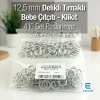
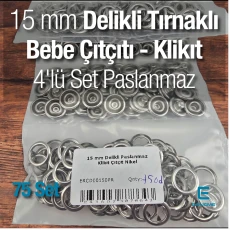
The 12.5 mm range includes ring-style and combination constructions, such as a capped upper face with a ring on one side. Some small packaged products are listed in 75-piece quantities. This group is useful to inspect when a small Klikıt model would be visually too subtle or when a design calls for a wider ring. The design of the two mating sides is important; a double-ring version and a cap-and-ring version may appear similar in size but are not the same product. Use the supplied product code to compare them. A larger prong does not remove the need for the appropriate die and sample testing.
15 mm and 17 mm options
The 15 and 17 mm prong ranges provide alternatives for textiles where a medium or larger visible snap is wanted. The 15 mm group includes double-ring and cap-and-ring styles, and the 17 mm group has large, long-prong and ring-cap variants. The prong length and face construction make a difference to the intended fabric layers and installation. When replacing an existing fastening, the same outer diameter may still hide a different prong configuration. For a new jacket or accessory, compare two candidate models on the actual cloth, then choose the one that closes properly and gives the desired appearance without distorting the material.
18 mm and 21 mm prong snaps
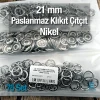
The biggest styles in the current group include an 18 mm capped item and 21 mm ring or cap-ring prong fasteners. A 21 mm packaged model is also listed in 75-piece quantities. These sizes are suitable to evaluate for heavier textiles, bag details and some outerwear applications, not for the narrow openings of baby garments. The relationship between diameter and fabric thickness still has to be checked on a test piece. Some 21 mm items have different visible sides, so compare the cap or ring arrangement before ordering. Keep the chosen product code with the die reference to avoid mixing a larger fitting with smaller Klikıt components.
How to read a product size
A listed diameter usually describes the named outer component, but different prong constructions can measure different parts of the assembly. This matters when two related products have similar catalogue numbers. For the baby ranges, work primarily in millimetres and compare the actual sample with the product photo. The approximate conversions are 8 mm at 0.315 inch, 9.5 mm at 0.374 inch and 10.5 mm at 0.413 inch. The larger models are about 0.49 inch at 12.5 mm, 0.59 inch at 15 mm, 0.67 inch at 17 mm and 0.83 inch at 21 mm. These are rounded figures; the millimetre measurement remains the best reference.
Choosing by fabric rather than size alone
Fine knit cotton, poplin, interlock, ribbed fabric and padded textile accessories do not behave the same way when a snap is set. Prongs have to engage the fabric correctly without damaging it. A size appropriate on a supported garment edge may perform poorly on a single thin layer. Check the fibre structure, number of layers and reinforcement before choosing a snap. If the fastening is meant for a baby garment, pay special attention to secure attachment and any applicable safety and testing requirements for the finished product. A practical sample should include repeated opening and closing, inspection of the prongs and checks for loosening or tearing.
Marking the opening and fitting the snap
Before fitting a Klikıt snap, align the garment layers in their intended closed position and mark where the two mating halves should meet. The prong ring or cap is positioned according to the exact model and fitted with a compatible die. The tool must compress the assembly enough to engage it securely without bending or damaging the visible face. Work first on a sample using the same materials and layer thickness as the finished article. After setting, inspect both sides of the snap, then close and open it several times. Misalignment is easier to correct at the test stage than after installing an entire production batch.
Why the correct die is essential
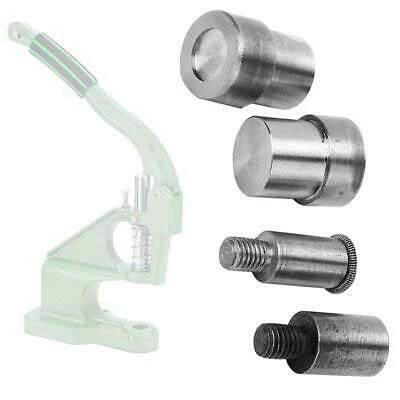
Prong snap setting dies must match the size and construction of the fastening. A 9.5 mm open-ring style may not use the same tooling arrangement as a 10.5 mm capped design or a much larger 17 mm prong snap. A suitable die supports the visible face and secures the mating component without crushing the material. Check the product’s installation information before buying tools. If a workshop already has a press, confirm the die is compatible with the snap model and the press attachment. Using the wrong upper or lower tool can cause a poorly seated snap, visible damage or an unreliable closure.
Hand tools and production presses
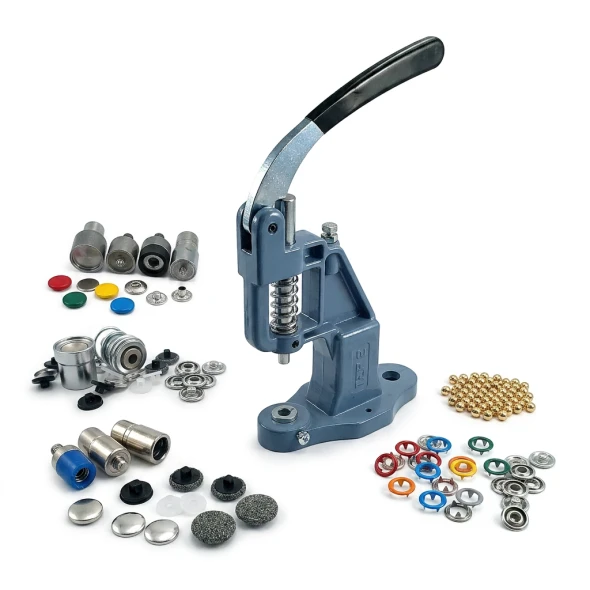
Small batches and sample work can sometimes be fitted with compatible hand-operated tools, while a workshop installing hundreds of snaps will often use a bench press and appropriate dies. The choice depends on the product and available tooling. What matters is a clean, stable installation, not simply the speed of the press. Start with one test fitting, inspect the face, check the underside and test the closure. If the component bends, sits at an angle or pulls through the fabric, stop to review the die, pressure and material rather than increasing force. Repeatable settings can then be used for the remaining batch once the sample is approved.
Browse matching prong snap setting dies and tools to compare fitting equipment. For other fastening types, see the press stud and snap fastener category.
Packing quantities and complete closures
The selling quantity differs considerably across Klikıt families. The catalogue includes examples of 100-piece pearl-effect packs, 144-piece coloured or brass options, 250-piece single-colour packs, 720-piece classic stainless packs and 1,000-piece 8 mm models. Larger packaged prong snaps may be listed as 75 pieces. This is why the quantity printed in the product name should be read before comparing prices. Confirm whether the listing uses pieces, matched sets or a mixed-colour assortment. For a manufacturing order, count the number of finished closure positions required and compare that number against the actual unit shown in the selected product listing.
A simple quantity example
Suppose a workshop is making 80 baby bodysuits and each bodysuit needs three closure positions. That requires 240 complete snap closures before allowing anything for sampling or spare parts. If a selected model is sold in a 250-set pack, one pack may cover the basic requirement. If it is sold in a 144-set pack, two packs would be needed, assuming those quantities denote complete sets. Always use the actual selling unit shown on the product page. If the garment uses more than one colour or construction, calculate each type separately. The arithmetic is useful, but it should follow the correct model selection rather than drive it.
Selecting a colour collection
A brand producing a coordinated clothing range may want the same finish across different garment colours. However, not all finishes are listed in each snap size or cap style. Make the shortlist by diameter and top design first, then compare the colour options for that product. Pastel and neutral shades can be checked using physical samples; pearl-effect options may need a separate appearance check because their surface reflects light differently. Keep the colour name, metal type and product code on the purchase order. A return to the same colour name in a different model is not enough to guarantee the final appearance will match an earlier production run.
Replacement and repair orders
When replacing a broken snap on a garment, inspect the remaining half before purchasing a new item. Determine whether the visible component is an open ring, closed cap or pearl-effect face, then measure its diameter and identify the material where possible. The original product code or order history is particularly helpful. Do not assume an 8 mm open-ring model from one family will mate with an older 8 mm snap from a different design. For a repair, replacing the complete matched closure is often more practical than trying to combine unrelated parts. The new snap still needs its matching die and a suitable installation area on the fabric.
Care of the finished garment
Fasteners are attached to clothing that may be washed, dried and worn frequently. The completed item should be cared for according to the combined requirements of fabric, dye, print, metal hardware and any decorative surface. A stainless snap does not by itself determine the garment’s washing instructions. Protect pearl-effect and painted finishes from inappropriate mechanical abrasion or high direct heat. On a sample garment, inspect the fastening after the intended care process and make sure it remains secure. In children’s wear, repeat fastening security checks as part of the finished product’s quality controls rather than relying only on the description of the metal.
How to compare product cards quickly
Use a consistent sequence when looking at the product list. First pick the diameter, then choose the upper face: open ring, cap, painted cap or pearl effect. Read the metal description, identify any specific colour or finish and compare the package quantity. Lastly check the installation die and the intended fabric use. This sequence makes the selection manageable even when many coloured variants are displayed. A product named “9.5 mm Klikıt” may have several counterparts with different caps and quantities. Keeping the model code in view prevents an accidental switch between similar listings while checking prices.
Choosing for a small repair or a full production run
A home sewer repairing a single garment may prefer an available smaller pack and a finish close to the original. A garment producer may be more concerned with repeatable installation across several hundred closures and the ability to reorder a specific SKU. In both situations the right size, construction and die come before pack price. For larger orders, make one complete sample and retain it as a reference. Then order the matching set quantity for the chosen model. This reduces waste from buying a large pack of a fastener that does not suit the fabric or the existing tool setup.
Common selection errors
Mistakes often happen when similar product titles are treated as interchangeable. Open-ring and capped snaps can differ in visible structure and fitting tools. Pearl-effect products have their own finishes and pack options. The larger 12.5–21 mm prong models should not be grouped into the same babywear use as the smallest Klikıt snaps. Packaging is another source of errors: 100, 144, 250, 720 and 1,000-piece options can appear in the same category. Always check the exact product, material, colour, selling unit and die reference. A sample installation is the final check before a larger purchase.
Finish your order with the right matching parts
Once the required style is clear, choose the diameter that fits the opening and check how its prongs will be secured through the fabric. Compare the available colours and the pack unit, then find the corresponding die for that product. If the garment uses multiple closures, count complete sets rather than visible caps. For repeat work, refer to the original product code. Customers choosing between baby snaps and large prong fasteners can use the separate size sections to avoid comparing unrelated items. The correct purchase is the one that fits the fabric, looks right on the finished article and can be installed with compatible equipment.
Frequently asked questions about baby prong snaps
What size is suitable for baby clothing?
The 8 mm, 9.5 mm and 10.5 mm Klikıt groups are the starting point for comparing compact snaps on babywear. The right model depends on the fabric, construction and attachment tests.
What is an open-ring snap?
Its visible upper component has a central opening, so the textile colour can show through. A capped snap has a closed face instead.
Are pearlescent snaps available?
The inspected range includes 9.5 mm pearl-effect models and selected 10.5 mm decorative options. Check the specific product and colour.
What are the package sizes?
Examples in the category include 75, 100, 144, 250, 720 and 1,000-piece products. The selected product listing gives the exact selling unit.
Does the eight-colour assortment contain eight snaps?
No. The specified 9.5 mm selection kit has eight colours with 144 sets per colour, making 1,152 sets in total.
Do I need a setting die?
Yes. A prong snap needs a die compatible with its diameter, visible top style and mating components.
Can I use baby snaps on thick coats?
Do not select a small babywear snap solely because it looks similar to a larger prong model. Compare the 12.5–21 mm families for heavier textiles and test the actual installation.
Can I match different models just by size?
No. Similar outside diameters do not establish that the mating pieces or dies are compatible. Use matched components from the intended model.
What is the difference between stainless steel and brass?
Both materials appear in the range, but the options and pack quantities depend on the model. Choose by the required construction, finish and fabric application.
What should I inspect after fitting a snap?
Check that the cap or ring sits evenly, the prongs are securely fixed, both halves engage and the fabric is not torn or distorted.
How do I choose a colour?
Compare the actual finish with the fabric sample and retain the exact product code and colour name for repeat ordering.
Can these snaps be used on baby products without testing?
The finished baby garment needs appropriate safety and attachment testing. A product name alone does not establish compliance for every end use.