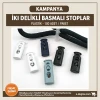
What Is a Plastic Cord Lock?
A plastic cord lock or drawstring stopper is an adjustable textile component used to control the movement of a cord, lace, string or compatible round elastic. Pressing the operating button aligns or releases the passages in the body and moving section. The cord can then be repositioned. Releasing the button allows the mechanism to apply pressure and help retain the selected adjustment.
Plastic cord locks provide reusable adjustment on hood openings, waist drawstrings, bag closures, footwear lacing systems, headwear and other gathered textile applications.
A plastic cord lock does not finish the cut end of a drawstring. Use cord ends and drawstring tips for the terminal sections. A cord lock and cord ends may perform separate functions within the same assembly.
Which Plastic Cord Lock Should Be Selected?
| Application Requirement |
Model to Consider |
Specification to Check |
| Adjust one cord through a shared passage |
Single-hole plastic cord lock |
Normal and lightly compressed cord diameter |
| Keep two cord ends in separate passages |
Double-hole plastic cord lock |
Internal size and routing direction of each passage |
| Release two cords simultaneously |
Single-button double-hole model |
Compatibility of both channels with the selected cord |
| Operate the component from different directions |
Top-and-bottom-operated model |
Installed orientation and access to each operating section |
| Route or position the cord differently |
Side-bridge or bottom-bridge model |
Bridge function, cord route and button access |
| Use a compact component |
Small, plain or round model |
Outside body size and operating comfort |
| Use a longer body that is easier to grip |
Elongated plastic cord lock |
Body length, fabric contact and visual scale |
| Join or separate two cord-lock sections |
Interlocking plastic cord lock |
Complete engagement and resistance to separation |
| Use a thicker cord or lace |
6–7 mm / 0.24–0.28 in or special-entry model |
Cord rigidity, compressed diameter and complete button closure |
Plastic Cord-Lock Structures
Single-Hole Plastic Cord Locks
A single-hole plastic cord lock provides one shared passage and is normally used with one cord. The category includes single-hole models with passages such as 3 mm / 0.12 in, 4 mm / 0.16 in, 5 mm / 0.20 in, 5.5 mm / 0.22 in, 6 mm / 0.24 in, 6.5 mm / 0.26 in and 7 mm / 0.28 in.
Two fine cord ends should only share the same passage when their combined compressed dimensions remain compatible. An oversized passage may allow easy threading but may also reduce holding performance.
Double-Hole Plastic Cord Locks
A double-hole cord lock keeps two cord ends in separate passages. It may help maintain parallel routing on hood, waistband and bag applications.
The stated hole diameter normally refers to each individual passage. Both channels must be compatible with the cord used in production.
A double-hole model is not automatically stronger than a single-hole model. Holding performance depends on cord dimensions, surface friction, spring pressure and internal passage geometry.
Top-Push Plastic Cord Locks
On a top-push model, the moving button is positioned on the upper section of the body. Pressing it aligns the cord passages. Releasing it allows the mechanism to engage the cord.
Top-push operation is available on both single- and double-hole models. The button should move freely and return completely with the actual cord installed.
Top-and-Bottom-Operated Models
Top-and-bottom-operated models may provide operating access or moving sections from more than one side of the body. Their cord route and installed orientation differ from a standard top-push cord lock.
Confirm which surface must remain accessible and whether the user can operate the component comfortably on the finished product.
Side-Bridge and Bottom-Bridge Models
A bridge model includes an additional routing, attachment or positioning section on the body. The bridge may change how the cord lock sits against the textile surface.
Do not select a bridge model by passage size alone. Check the direction of cord entry, the purpose of the bridge and the installed body position.
Interlocking Plastic Cord Locks
An interlocking cord lock may use two sections that can be connected or separated through a dedicated joint. When connected, the sections can help organise two cord ends within one arrangement.
Interlocking construction does not prove suitability for every pulling load. Test the connection in the actual direction of use.
Single-Hole and Double-Hole Models Compared
| Feature |
Single-Hole Model |
Double-Hole Model |
| Cord arrangement |
Uses one shared passage. |
Keeps two cord ends in separate passages. |
| Common application |
Single-cord adjustment points |
Two-ended hood, waistband and bag systems |
| Measurement check |
Compare one passage with the cord dimensions. |
Check each passage against the cord used. |
| Holding performance |
Depends on passage, spring and cord surface. |
Depends on individual channel compatibility, not hole count alone. |
| Threading |
Follows one cord route. |
Both ends must enter separate passages without crossing. |
How to Measure Cord Compatibility
The metric or imperial value in the product title normally identifies the nominal passage or hole diameter. Cords carrying the same nominal diameter may behave differently because of braid density, filling, rigidity and surface construction.
| Feature to Check |
Why It Matters |
How to Check It |
| Outside round-cord diameter |
Determines whether the cord can enter the passage. |
Measure several points without flattening the cord. |
| Lightly compressed diameter |
Shows how much a soft or filled cord narrows under spring pressure. |
Record it together with the normal measurement. |
| Cord surface |
A smooth surface may continue to move after locking. |
Complete a pull test in the actual operating direction. |
| Cord rigidity |
A rigid cord may prevent complete button closure. |
Confirm full button return with the cord installed. |
| Joined or finished cord section |
A knot, seam or heat-sealed section may not pass through. |
Install the cord lock before completing the terminal section. |
| Outside body dimensions |
Affect visual scale and passage through other components. |
Compare width and length with the garment, eyelet and cord route. |
Common Cord-Passage Groups
The imperial values below are approximate reference conversions. Final approval must be based on the verified individual product page.
| Cord Passage |
General Selection Area |
Compatibility Check |
| 3 mm / 0.12 in |
Fine cords and compact accessories |
Confirm that the cord does not slip after locking. |
| 4–4.5 mm / 0.16–0.18 in |
Hoods, garments, footwear and lightweight bags |
Check braid density, surface and compressed diameter. |
| 5–5.5 mm / 0.20–0.22 in |
Hoodies, tracksuits and medium-weight bag cords |
Check movement in both released and locked positions. |
| 6–6.5 mm / 0.24–0.26 in |
Thicker laces, filled cords and selected round elastic |
Confirm that cord rigidity does not overload the mechanism. |
| 7 mm / approximately 0.28 in |
Thick cords and larger single-hole models |
Check both threading and locked holding performance. |
| Model-specific 9 mm / 0.35 in entry |
Wider cords and special body structures |
Verify the actual passage and grip with a production sample. |
These measurements do not guarantee compatibility. Manufacturing tolerance, braid construction, filling, surface friction and compressibility may change performance.
Outside Body Size and Cord Passage Are Different Measurements
The width and length of a cord lock describe its outside body. The cord passage describes the internal hole or channel. A cord lock measuring 21 × 25 mm / 0.83 × 0.98 in externally may still use a 4 mm / 0.16 in or 5 mm / 0.20 in cord passage.
Keep the following specifications separate:
- Cord-passage or hole diameter
- Individual passage dimensions
- Outside body width
- Outside body length
- Button dimensions and travel
- Bridge or attachment-section position
Plastic and Derlin Cord Locks
The category filter identifies most products as plastic and one model separately as Derlin. The exact material must be confirmed on the individual product page.
Do not assume that all products listed as plastic use the same polymer. ABS, polypropylene, nylon or another material should only be stated where the product page provides verified information.
Material selection should also consider body thickness, internal spring, button operation, colour treatment, temperature and intended environment.
Plastic and Metal Cord Locks Compared
| Feature |
Plastic Cord Lock |
Metal Cord Lock |
| Main body |
Plastic or product-specific Derlin material |
Zinc alloy or another stated metal |
| Weight |
Adds less weight to lightweight textile products. |
May create a heavier and more visible hardware detail. |
| Colour options |
Black, white, navy, orange, red, yellow, purple, transparent and model-specific colours may be available. |
Plated or painted metal surfaces may be available. |
| Primary selection reason |
Low weight, colour coordination and practical operation |
Metal appearance and coordination with other hardware |
| Surface check |
Check mould lines, edges and body contact. |
Test weight, edges and metal-surface contact. |
For metal alternatives, review the metal cord locks category.
Colour Options
Depending on the model, plastic cord locks may be offered in black, white, navy, orange, red, yellow, dark green, purple, transparent and other product-specific colours.
Not every colour is continuously stocked for every model. Check whether the body, button, internal section and bridge use the same colour.
Custom-colour production may require a minimum quantity, approved colour sample and model-specific production conditions.
Real-World Applications
- Hoodie, coat and jacket adjustment cords
- Tracksuit, shorts and sportswear waist drawstrings
- Bag, backpack, pouch and drawstring-sack closures
- Shoe, boot and trainer laces
- Adjustment cords on hats and neck warmers
- Sleeping bags and compatible camping textiles
- Curtain, cover and home-textile gathering systems
- Compatible round-elastic adjustment points
- Promotional products and craft cord applications
Not every plastic cord lock is suitable for every application. Outdoor exposure, continuous moisture, high temperature, chemical contact and high pulling loads must be verified for the individual product.
How Is a Plastic Cord Lock Installed?
- Measure the normal and lightly compressed cord diameter.
- Check whether the model has one or two passages.
- Press the operating button to align the openings.
- Thread the cord through the correct passage and direction.
- On a double-hole model, position the two ends in separate passages.
- On a bridge model, confirm that the cord follows the intended route.
- Release the button so the mechanism engages the cord.
- Pull in the actual operating direction to test slipping.
- Fit terminal cord ends after completing the cord-lock installation.
Standard push-button plastic cord locks are normally installed by hand. A press or setting die is not required for threading the lock onto the cord. A separate tool may be required for a terminal cord end.
Cleaning and Operating Checks
Surface dust and dirt may be removed with a suitable soft cloth. Any cleaning product should first be tested for its effect on the plastic body, colour and internal mechanism.
Routine lubrication should not be recommended for the entire category. A lubricant may affect the polymer, colour treatment or cord and may retain dirt inside the mechanism. Apply maintenance products only where specifically approved for the individual item.
Incorrect Selection and Use Warnings
- A cord that is too narrow may slip after locking.
- A cord that is too thick may not pass through or may prevent complete button closure.
- Check the compressed diameter of soft and filled cords.
- A very smooth cord may slip despite having a suitable nominal size.
- The number of holes does not determine holding strength by itself.
- Do not apply three-hole or heavy-duty claims to models without verified specifications.
- A rigid cord may prevent complete button return.
- Incorrect bridge orientation may bend or misroute the cord.
- Test interlocking joints under the intended pulling direction.
- A fitted cord end may not pass through the cord-lock passage or eyelet.
- Plastic appearance alone does not confirm wash, heat, chemical or outdoor suitability.
- Small-part and detachment risks must be assessed separately for children’s products.
- Complete a sample test with the actual cord and finished product before wholesale ordering or mass production.
Related Categories
Frequently Asked Questions About Plastic Cord Locks
What is a plastic cord lock and what does it do?
A plastic cord lock is a push-button adjuster used to control cord length or gathering and help retain the cord at the selected position.
How do I select the correct plastic cord-lock size?
Measure the outside diameter and, for soft cord, the lightly compressed diameter. Compare the measurements with the verified cord passage.
What is the difference between single-hole and double-hole plastic cord locks?
A single-hole model has one shared passage. A double-hole model keeps two cord ends in separate passages. The number of holes does not determine holding strength by itself.
What is the difference between top-push and top-and-bottom-operated cord locks?
A top-push model uses a moving button operated from one direction. A top-and-bottom-operated model may arrange operating access or locking sections according to two sides of the body.
Why does the plastic cord lock fail to hold the cord?
The cord may be too narrow, too smooth or too rigid for the selected mechanism. Spring pressure and passage geometry also affect actual holding performance.
Why is the plastic cord-lock button difficult to press?
The cord may be too thick or rigid, may be trapped in the passage or may prevent correct alignment. Check compatibility before forcing the mechanism.
Does a plastic cord lock require a press or setting die?
Standard push-button plastic cord locks are normally installed by hand. Press the button to open the passage and thread the cord through it. A separate tool may be required for a terminal cord end.
Can a plastic cord lock be used with round elastic?
It may be used when the passage and mechanism are compatible. Because elastic changes diameter under compression and tension, test it with the actual material.
Are plastic and Derlin cord locks the same?
The category filter identifies most products as plastic and one model separately as Derlin. Verify the exact material on the individual product page.
Should the cord lock or cord end be installed first?
If the completed cord end is larger than the lock passage, thread the cord lock first and fit the cord end after completing the cord route.
Are plastic cord locks machine washable?
Wash suitability cannot be determined from the plastic body alone. The polymer, colour, internal spring, wash temperature and detergent conditions must be evaluated together.
Is sample testing required before wholesale production?
Yes. A sample confirms cord passage, holding performance, button movement, body size, colour and appearance on the finished product.
Last updated: 21 July 2026
Business and brand: E-Düğme – Istanbul, Türkiye
Technical verification note: Refer to the individual product page for exact metric and imperial passage dimensions, outside body size, hole arrangement, material, colour, pack quantity and mechanism structure.